Lane splitting is illegal in Texas. Section 545.0605 of the Texas Transportation Code, which took effect on September 1, 2023, prohibits a motorcyclist from riding between lanes of traffic moving in the same direction or passing a vehicle while in the same lane.
Plenty of riders still believe Texas law is silent on the practice, or that slipping between stopped cars at a red light is allowed. Neither is true under the current statute, and the difference matters most after a crash, when an insurer looks for any reason to shift blame onto the rider.
If you were hurt in a motorcycle crash involving lane splitting or a lane change, a Texas motorcycle accident lawyer can help you pursue compensation for your losses.
Key Takeaways: Lane Splitting in Texas
- Texas bars riding a motorcycle between lanes of traffic moving in the same direction.
- The same section bars passing a motor vehicle while in the same lane as that vehicle.
- Two motorcycles may ride side by side in a single lane, but three or more may not.
- Drivers may not operate a vehicle in a way that deprives a motorcycle of the full use of a lane.
- A lane splitting violation doesn’t automatically bar an injury claim.
Can Motorcycles Legally Ride Between Lanes in Texas?
No. Since September 1, 2023, Texas law has barred motorcyclists from riding between lanes of traffic moving in the same direction and from passing a vehicle in the same lane. Two motorcycles may still ride side by side in one lane.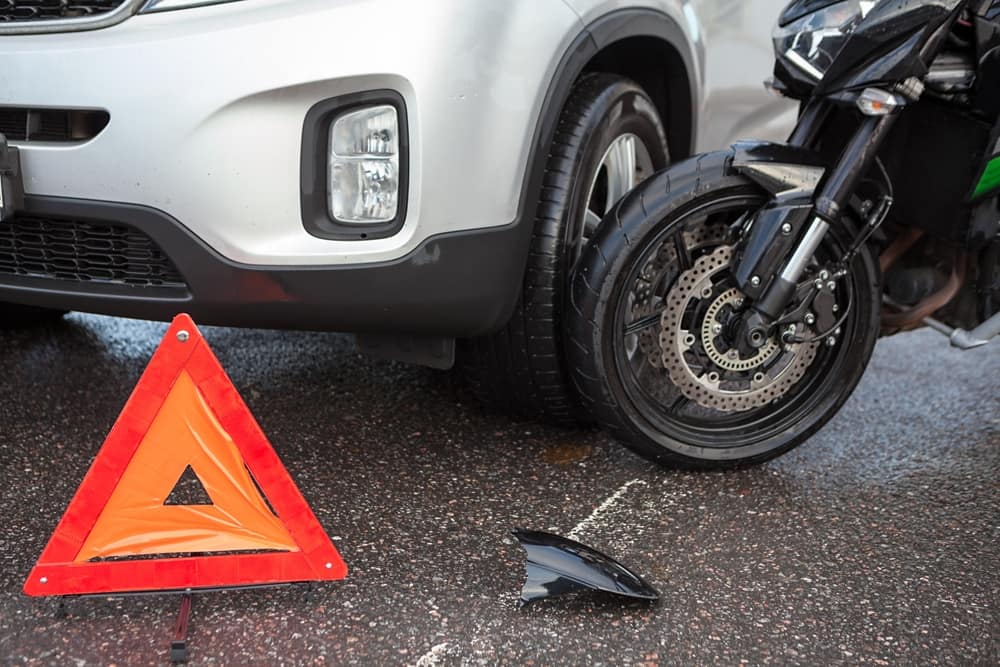
What Does Texas Law Say About Lane Splitting?
Texas law says a motorcyclist may not ride between lanes of same-direction traffic. The rule sits in Transportation Code Section 545.0605, which the Legislature added in 2023 to spell out how motorcycles use a lane.
What Section 545.0605 Allows and Prohibits
The statute gives riders one protection and sets three limits. Under the text, a motorcycle operator:
- Has the right to full use of a lane, and a motor vehicle may not be driven in a way that deprives the motorcycle of it
- May ride two abreast in a single lane with one other motorcycle
- May not ride more than two abreast in a single lane
- May not ride between lanes of traffic moving in the same direction
- May not pass a motor vehicle while in the same lane as that vehicle
The limits in items 3 through 5 do not apply to a police officer performing official duties.
When Did Texas Ban Lane Splitting?
The ban took effect on September 1, 2023. It came from House Bill 4122, which the governor signed on June 12, 2023. Before that date, Texas had no statute that named lane splitting. Riders could still be cited under the general rule that a driver on a laned roadway must stay as nearly as practical within a single lane and may not leave it unless the move is safe, and that rule remains in Section 545.060.
Has Texas Legalized Lane Filtering Since Then?
Texas has not legalized lane filtering. A 2025 bill on the same subject, House Bill 2957, was referred to the House Transportation Committee in March 2025 and went no further, so Section 545.0605 still reads as it did when it took effect.
Lane Splitting, Filtering, and Sharing: What Is the Difference?
Riders use three terms for moving through traffic, and Texas treats them differently.
| Practice | What It Means | Allowed in Texas? |
|---|---|---|
| Lane splitting | Riding between lanes of moving traffic headed the same way | No |
| Lane filtering | Moving between stopped or slow vehicles, often at a light | Not authorized; the statute has no exception for stopped traffic |
| Same-lane passing | Overtaking a car while staying in that car’s lane | No |
| Lane sharing | Two motorcycles are riding side by side in one lane | Yes, for two motorcycles only |
| Shoulder riding | Using the improved shoulder to get around traffic | Only when necessary, safe, and for a purpose |
Filtering is where most confusion comes from. State law bars riding between lanes of traffic moving in the same direction and contains no carve-out for vehicles stopped at a light, so a rider who filters forward at an intersection is exposed to a citation and to a fault argument after any crash.
What Is the Penalty for Lane Splitting in Texas?
Section 545.0605 doesn’t set its own penalty, so a violation falls under the Transportation Code’s general penalty for traffic misdemeanors: a fine of $1 to $200. The citation itself is modest, but it can follow a rider into an injury claim.
A citation or a police report noting lane splitting gives an insurer a ready argument that the rider caused or contributed to the crash.
Can You Recover Compensation After a Lane Splitting Crash?
A rider who was lane splitting can still recover compensation in Texas if the rider was not more than 50% responsible for the crash. Under the state’s proportionate responsibility rule, recovery is reduced by the rider’s percentage of fault, and it is barred only when that percentage is greater than 50.
How Fault Percentages Change a Recovery
Suppose a jury values a rider’s damages at $150,000 and finds the rider 30% responsible for splitting lanes and the driver 70% responsible for an unsignaled lane change. The rider’s recovery is reduced by 30% to $105,000.
If the same jury placed 51% of the fault on the rider, the rider would recover nothing from that driver. The percentage, rather than the violation alone, decides the outcome, which is why the evidence about what the driver did matters as much as what the rider did.
When the Driver Still Carries Most of the Blame
A lane-splitting violation doesn’t erase a driver’s own duties. These driver errors often appear in motorcycle crashes involving lane position:
- Changing lanes without checking mirrors or blind spots
- Crowding a motorcycle out of its lane
- Turning left across the path of an oncoming motorcycle
- Following too closely and striking a rider who slowed or stopped
Insurance adjusters work to minimize payouts, and a lane-splitting allegation gives them an easy place to start. A thorough investigation can reveal how the driver’s actions contributed to the crash, which is often key to determining liability in motorcycle accidents.
Helmet Use and Your Claim
Helmet use is a separate fault issue that often comes up alongside lane position. Under Transportation Code Section 661.003, riders and passengers must wear protective headgear unless they are at least 21 and have either completed an approved motorcycle safety course or carry health insurance covering crash injuries.
An insurer may argue that riding without a helmet made a head injury worse, even when the rider was legally exempt. How your helmet use affects a claim depends on the injury and the evidence linking it to the crash.

How a Lane Splitting Allegation Shows Up in a Claim
A lane-splitting allegation can affect a motorcycle accident claim through the police report, the insurance company’s fault decision, or a lawsuit. If the rider is accused of traveling between lanes, the insurer may use that claim to argue the rider caused or contributed to the crash and reduce its settlement offer.
Knowing where the allegation appears helps a rider understand how evidence can challenge it.
In the Crash Report
The investigating officer’s report records where each vehicle was, the officer’s view of contributing factors, and any citation. A report describing the rider between lanes serves as the starting point for the insurer’s fault analysis, even when the officer did not witness the crash.
Witness statements, video, and the physical evidence can support or contradict that description. When the report is wrong about lane position, those other sources are how the record gets corrected.
In the Insurance Adjuster’s Fault Decision
Before any lawsuit, the at-fault driver’s insurer decides how much fault to assign to the rider and makes an offer based on that percentage. An adjuster who assigns the rider half the blame will offer far less than one who assigns 10%, even though nothing in the law requires the rider to accept either number.
In a Texas Lawsuit
If the claim goes to court, the jury or judge decides fault. Under Section 33.003 of the Civil Practice and Remedies Code, the trier of fact assigns a percentage of responsibility to each claimant, each defendant, each settling person, and each designated responsible third party.
A rider’s percentage is therefore weighed against every other party’s conduct rather than judged in isolation. A driver who changed lanes without looking, or a second driver who boxed the rider in, each carries a share that can lower the rider’s.
Evidence That Helps Your Claim After a Lane Position Crash
Lane position disputes are decided by evidence, and much of it disappears quickly. Helpful evidence includes:
- Photos of the vehicles’ final positions, lane markings, and damage
- Helmet camera or dash camera footage from the rider, the driver, or nearby vehicles
- Names and contact details for witnesses who saw the lane change or the rider’s path
- The Texas Peace Officer’s Crash Report and any citations issued
- Medical records that tie each injury to the crash date
Avoid posting about the crash or your injuries on social media while a claim is open, since insurers review public posts. With these records in hand, an attorney consultation can give a far more complete picture of how fault is likely to be divided.
FAQs: Lane Splitting in Texas
Can a motorcycle ride on the shoulder to get around traffic in Texas?
Texas allows a motorcycle to use the improved shoulder to the right only when it is necessary and can be done safely, and only for the listed purposes, which include passing a vehicle that is slowing or stopped on the main traveled portion of the highway.
Whether a particular shoulder pass was necessary and safe is a fact question that an insurer may dispute.
Can a passenger on a lane-splitting motorcycle recover damages in Texas?
A passenger can usually bring a claim because the passenger didn’t control how the motorcycle was ridden. Depending on how fault is divided, your claim may run against the other driver, the motorcycle operator, or both, with each party’s insurance in play.
Will my Uninsured Motorist coverage pay if I was lane-splitting in Texas?
Your UM coverage may cover some of your losses, but your degree of fault still matters. Texas UM/UIM coverage generally follows the same fault rules as a lawsuit, so your share of fault can reduce what it pays.
How long do I have to file a motorcycle accident lawsuit in Texas?
You usually have two years from the crash to file a personal injury lawsuit. Some exceptions can change that deadline, and claims involving government vehicles may require written notice much sooner.
Can police officers lane split in Texas?
Police officers can split lanes in Texas while they’re performing official duties. The rules on riding more than two abreast, splitting lanes, and same-lane passing don’t apply to a police officer in the performance of the officer’s official duties.
You Don’t Have to Handle Your Claim Alone

A crash that involves lane position quickly turns into a debate about percentages, and the person in the hospital is rarely the one setting the terms of that debate. Bringing in a legal team that knows the statute, builds the evidence, and is ready to take the fight to the insurer changes how that conversation goes.
DFW Injury Lawyers helps injured riders across Texas pursue compensation on a No Win, No Fee basis. We offer free consultations in English and Spanish. To discuss your case with our Texas motorcycle accident lawyers, call 888-231-1341 or contact us online.

Pedro “Peter” de la Cerda
Founder
Attorney Pedro “Peter” de la Cerda is a co-founder of DFW Injury Lawyers. As a young attorney looking for courtroom experience, Mr. de la Cerda began his career defending physicians, nurses, hospitals, trucking, and manufacturing companies in disputes involving personal injury, medical malpractice, products liability, and toxic tort. After seeing many people who were truly injured and deserving of fair compensation, however, Mr. de la Cerda was moved to cross the courtroom aisle and prosecute cases on behalf of plaintiffs in personal injury cases.
Author's Bio