Liability for a truck accident in bad weather usually comes down to whether the trucker adjusted to the conditions in front of them. Rain, ice, and fog don’t erase fault in Texas. They raise the bar for how carefully a professional driver is supposed to operate.
This trips people up because the weather feels like nobody's fault. A sleet storm rolling across North Texas is not something anyone controls. What a driver can control is speed, following distance, and the decision to pull off the road.
That distinction is the heart of most of these cases. A Texas truck accident lawyer looks past the storm to what the driver actually did, because that is where responsibility tends to live.
Key Takeaways for Bad Weather and Truck Accident Liability
- Bad weather alone is not a defense; drivers must adjust to the conditions they face.
- Federal rules tell truckers to slow down in poor conditions and stop when driving gets too dangerous.
- Speeding for the conditions is still speeding, even when the driver was under the posted limit.
- Road problems like standing water or a bad work zone can put a third party on the hook.
- Being partly at fault reduces your recovery in Texas, but it doesn’t automatically end your claim.
Quick Answer: Can a Trucker Blame the Weather for a Crash in Texas?
Bad weather by itself doesn’t excuse a truck driver from causing a crash in Texas. Federal safety rules require truckers to slow down in rain, ice, and fog, and to stop driving altogether when conditions get dangerous enough.Liability for a truck accident in bad weather usually turns on whether the driver adjusted to the conditions, not on the weather itself.
Can a Trucker Blame the Weather for a Crash?
A trucker can’t escape blame in Texas by pointing at the weather, because the law expects drivers to adapt to whatever the road gives them. The storm is context. The driving decisions made inside that storm are what get examined.
Trucking companies still try this argument constantly. They call the crash unavoidable, an act of nature, something nobody could have prevented. That framing only works if the driver did everything reasonable and the crash happened anyway, which is rarely what the evidence shows.
Think about how this plays out on a wet stretch of I-45. A driver going 65 mph in heavy rain was under the 70-mph speed limit, so the ticket book says nothing happened. Yet if that speed left no room to stop on a slick surface, the driver was going too fast for the conditions, and going too fast for conditions can support a finding of negligence.
The same principle applies to every bad weather excuse. Fog doesn’t require anyone to keep driving blind. Ice does not force a trucker onto an overpass. Whenever a driver had the option to slow down, add space, or park until things improved, choosing not to is a decision they own.
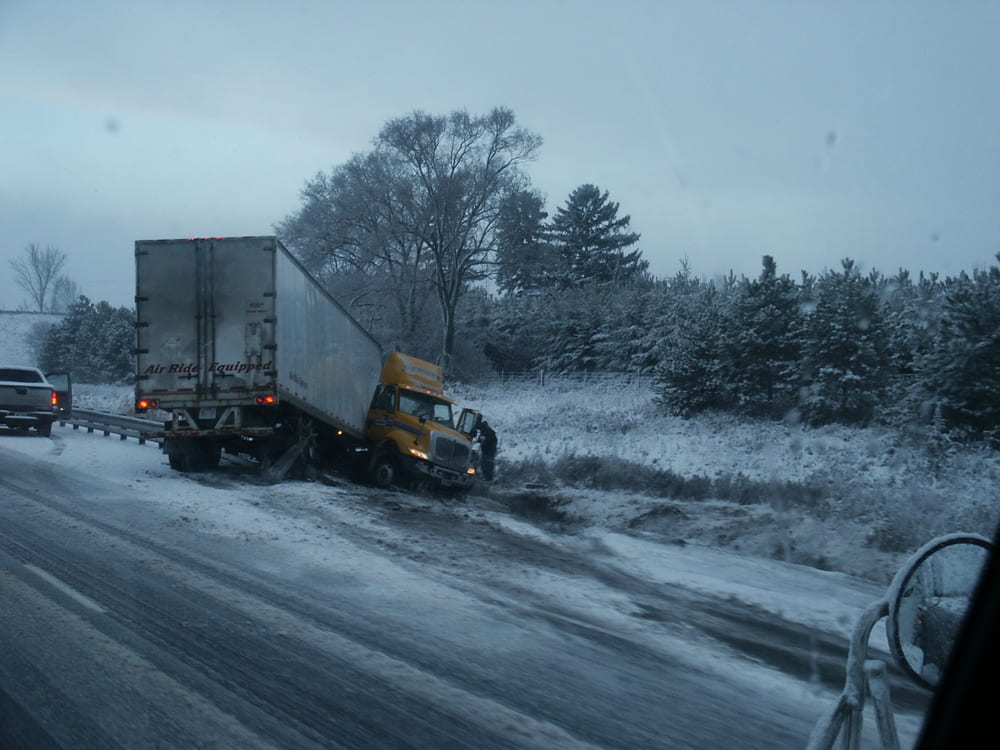
What Do Federal Rules Require Truckers to Do in Bad Weather?
The Federal Motor Carrier Safety Administration (FMCSA) requires commercial truck drivers to use extreme caution when snow, ice, sleet, fog, mist, rain, dust, or smoke reduces visibility or traction.
Under 49 C.F.R. § 392.14, drivers must reduce their speed when those conditions exist and stop operating when the conditions become dangerous enough that the truck can’t be driven safely.
That last part is the piece carriers tend to skip past. The obligation is not simply to drive a little slower in a storm. Once conditions become sufficiently dangerous, § 392.14 requires the driver to stop until the truck can be operated safely again, unless stopping would create even greater danger.
FMCSA guidance also puts the decision to stop on the driver because the driver is responsible for safely operating the commercial vehicle. A dispatcher's pressure to make a delivery window doesn’t take that responsibility away.
Investigators generally look for a handful of specific failures:
- Driving Too Fast for Conditions: Staying at highway speed on wet, icy, or fog-covered pavement can violate the duty to reduce speed even when the truck remains under the posted limit.
- Following Too Closely: Keeping a normal following distance on slick roads can leave too little room to stop safely.
- Refusing To Stop: Continuing through sleet, whiteout conditions, or dense fog can violate § 392.14 once conditions become too dangerous for safe operation.
- Ignoring Equipment Problems: Worn tires, faulty wipers, poor lighting, or other maintenance issues can become especially important when the weather already limits traction or visibility.
Federal rules also require commercial vehicles to follow the traffic laws of the jurisdiction where they’re operating unless an FMCSA regulation sets a higher standard.
How Do Rain and Ice Change Fault in a Texas Truck Crash?
Rain and ice change who’s at fault in a Texas truck crash by raising what counted as careful driving at that moment. The legal standard doesn’t change with the forecast, but what satisfies it does, and a maneuver that is perfectly safe on a dry August afternoon can be reckless in a February freeze.
Texas weather makes this a year-round issue rather than a winter one. North Texas ice storms glaze bridges and overpasses around Dallas and Fort Worth while surface streets stay clear, which is exactly how a rig ends up sideways on an elevated ramp.
Gulf Coast downpours flood lanes and hide standing water deep enough to hydroplane a 40-ton truck. Each condition creates its own hazard, and each one has a known adjustment that a trained driver is supposed to make.
Common bad weather patterns include:
- Rain and Hydroplaning: Wet pavement lengthens stopping distance and lifts tires off the surface, so speed and following distance both need to drop.
- Ice and Black Ice: Bridges and overpasses freeze first in Texas, and a driver who knows the route should expect it during a hard freeze.
- Fog and Dust: Low visibility calls for slowing to a speed that matches how far ahead the driver can actually see, and sometimes for getting off the road.
- High Wind: Crosswinds on open highways can push an empty or high-profile trailer out of its lane or over on its side.
Who Can Be Liable for Dangerous Road Conditions?
A contractor, construction company, or government entity can sometimes share responsibility when a dangerous road condition contributes to a truck crash. Liability depends on who created, controlled, or had a legal duty to address the hazard.
Contractors and Construction Companies
Poor drainage can leave standing water across a travel lane, while faded lane markings, missing warning signs, or a pavement drop-off can make a construction zone dangerous even before bad weather hits.
When a contractor creates or fails to address one of those hazards, that contractor can become part of the liability picture.
Government Entities
Government entities can be involved, too, but those claims come with additional hurdles. Under the Texas Tort Claims Act, liability can depend on the type of roadway defect and what the government entity knew about it.
More Than One Party
A dangerous road condition doesn’t automatically let the trucker off the hook. A contractor could share responsibility for a hazardous work zone while the truck driver bears responsibility for entering it too fast for the conditions.
That’s why a lawyer may investigate both the truck and the roadway to identify every party whose conduct contributed to the crash.
How Insurance Carriers Use Weather To Shift the Blame
Insurance carriers use weather to shift blame by recasting a preventable crash as an unavoidable accident. The story writes itself if nobody pushes back: the roads were terrible, visibility was poor, and the driver was just another victim of the storm.
Watch for the version where the blame lands on you. Adjusters will suggest you were driving too fast for the rain, that you stopped short, or that your tires were bald. A recorded statement taken days after a crash is a common place for those suggestions to get planted, which is one reason to be careful about giving one early.
Weather is only one page in a much larger playbook, and there are other tactics carriers use to avoid liability that show up in these cases, too. The pattern is usually the same regardless of the excuse. Delay the investigation, control the narrative, and hope the injured person accepts that nothing could have been done.
The counter is evidence, and there is normally plenty of it. Storms are documented minute by minute, trucks record their own behavior, and roads leave physical marks. These same rules shape how weather affects fault in any crash, not just ones involving big rigs.
What Evidence Undercuts a Weather Defense in Texas?
Historical weather records, truck data, dashcam footage, dispatch messages, and driver records can undercut a weather defense by showing what conditions existed and how the trucker responded to them. The strength of these cases lies in the fact that both the weather and the truck leave detailed records.
Historical weather data can pin down conditions at a specific location and time, sometimes down to the minute. That gets paired with what the truck itself recorded, since some onboard systems can record speed, braking, and throttle input.
A log showing 68 miles per hour through a documented downpour makes the unavoidable-accident story collapse. Other drivers matter as well. If a dozen trucks were parked at a stop off I-20 waiting out an ice event and this one kept driving, that contrast speaks volumes about what a reasonable professional would have done.
The proof usually comes together from a few reliable sources:
- Weather and Road Records: Archived reports, radar, and agency advisories can establish the conditions the driver was facing.
- Truck Data and Dashcam Footage: Onboard modules and cameras can capture speed, braking, and visibility in the seconds before impact.
- Dispatch and Company Messages: Communications can show whether the carrier pressured the driver to keep moving through a storm.
- Driver Records and Training Files: Hours of Service logs and training documents can reveal fatigue or gaps in bad-weather instruction.
Most of that material sits in the carrier's hands, and none of it is kept forever. Onboard systems can overwrite older data, dashcam files can get cycled out, and a damaged truck can be repaired before anyone inspects it. Sending a preservation letter early can help keep important evidence from disappearing.
FAQ for Bad Weather and Truck Accident Liability
Who Is Liable for a Texas Truck Accident in Bad Weather?
The driver and often the trucking company remain liable for a truck accident in bad weather when the driver failed to adjust to conditions. Weather explains the setting of a crash, not the responsibility for it, so liability follows the driving decisions made in that setting.
Does an Act of God Defense Work in a Texas Truck Crash?
The act of God defense rarely succeeds in a Texas truck crash. It requires showing the event was truly unforeseeable and that no reasonable action could have prevented the harm, which is a hard argument to make when a forecast existed, and other drivers pulled over safely.
Can a Lawyer Help Me Recover Compensation if I Was Also Driving in the Storm?
A Texas truck accident lawyer can help you pursue compensation even if you were also driving during the storm. Texas can reduce your recovery by your share of the fault, so a lawyer can investigate how each driver handled the conditions and push back if the trucking company tries to place too much blame on you.
What if There Was Ice on the Bridge and Nobody Salted It?
You may have a claim against both the trucker and the entity responsible for maintaining that bridge. Claims involving public roads follow stricter notice requirements and much shorter deadlines than a standard injury claim, so the timing on those becomes critical.
Is a Trucker Speeding if They Were Under the Posted Limit?
A trucker can be considered speeding while driving under the posted limit. Posted limits assume good conditions, and driving too fast in rain, ice, or fog can support a finding of negligence regardless of what the sign says.
Don’t Let a Storm Take the Blame
The weather didn’t decide to keep that truck rolling at highway speed. A person did, and a company backed that choice with a schedule. That’s the difference these cases turn on, and it is the part an insurer would rather not discuss with you.
DFW Injury Lawyers knows how the storm story gets built, and we know how to pull it apart with the driver's own data. You shouldn’t have to accept that a serious injury was simply nobody's fault.
Call DFW Injury Lawyers at (888) 231-1341 or reach out through our online form, and let a Texas truck accident lawyer take the weather defense apart while you focus on getting better.

Pedro “Peter” de la Cerda
Founder
Attorney Pedro “Peter” de la Cerda is a co-founder of DFW Injury Lawyers. As a young attorney looking for courtroom experience, Mr. de la Cerda began his career defending physicians, nurses, hospitals, trucking, and manufacturing companies in disputes involving personal injury, medical malpractice, products liability, and toxic tort. After seeing many people who were truly injured and deserving of fair compensation, however, Mr. de la Cerda was moved to cross the courtroom aisle and prosecute cases on behalf of plaintiffs in personal injury cases.
Author's Bio