A truck accident expert witness is a qualified professional who explains technical evidence to a Texas jury in terms it can act on. Commercial trucking cases run on data most people never encounter, including the truck’s digital data and federal maintenance standards. Experts translate that material into a clear account of what went wrong.
This matters because the burden of proof sits with the injured person. A carrier's insurer will not concede that a driver was speeding or that a maintenance file shows neglect, and testimony from a qualified specialist is how those points get established.
Texas courts also apply real gatekeeping. A judge must find that an expert is qualified and that the methods behind the opinion are reliable. A Texas truck accident lawyer builds these cases around specialists whose work holds up under that scrutiny.
Key Takeaways for Truck Accident Expert Witnesses
- Expert witnesses explain technical evidence, including black box data, load records, and federal safety rules.
- Accident reconstructionists calculate speed, braking, and impact angles from physical evidence.
- Trucking safety experts identify which industry rules the driver or carrier violated.
- Medical and economic experts establish the full scope of your injuries and lifetime losses.
- A Texas judge must approve each expert as qualified before a jury hears the testimony.
Quick Answer: What Does a Truck Accident Expert Witness Do?
A truck accident expert witness explains technical evidence that a jury may not be able to interpret on its own. Accident reconstructionists calculate speeds and impact angles, trucking safety experts identify which federal rules the carrier broke, physicians connect injuries to the crash, and economists total lifetime losses.Which Experts Testify in a Texas Truck Accident Trial?
Five types of witnesses often testify in truck accident trials: accident reconstructionists, trucking safety and compliance experts, treating physicians and medical specialists, economists or vocational experts, and occasionally human factors specialists. Each one addresses a separate question that the jury must answer.
Fact witnesses and expert witnesses serve different functions. A bystander on the shoulder of I-35 near Waco can describe what they saw, and nothing more. An expert may review evidence they never witnessed and offer a professional opinion about what caused it.
Cases tried in Dallas County and Tarrant County civil courts frequently involve several of these specialists working from the same evidence file.
The division of labor is deliberate because no single professional is qualified to speak to physics, federal regulations, spinal surgery, and lost earning capacity at once.
Understanding which expert answers which question clarifies how these cases get built:
- Accident Reconstructionists: These engineers calculate pre-crash speed, braking behavior, and impact angles using physical evidence and vehicle data.
- Trucking Safety and Compliance Experts: Former carrier executives and safety directors identify violations of federal hours, inspection, and hiring standards.
- Medical Experts: Treating physicians and specialists connect specific injuries to the crash and describe the care a patient will still require.
- Economists and Vocational Experts: These professionals calculate lost income, reduced earning capacity, and the lifetime cost of ongoing care.
Human factors specialists appear in a narrower set of cases. These experts address perception and reaction, explaining how long a driver needed to notice a hazard and respond to it, and whether the maneuver a carrier claims was possible actually was.
Their testimony becomes important when the defense argues an injured motorist should have avoided the collision.
How Does Accident Reconstruction Rebuild a Truck Crash?
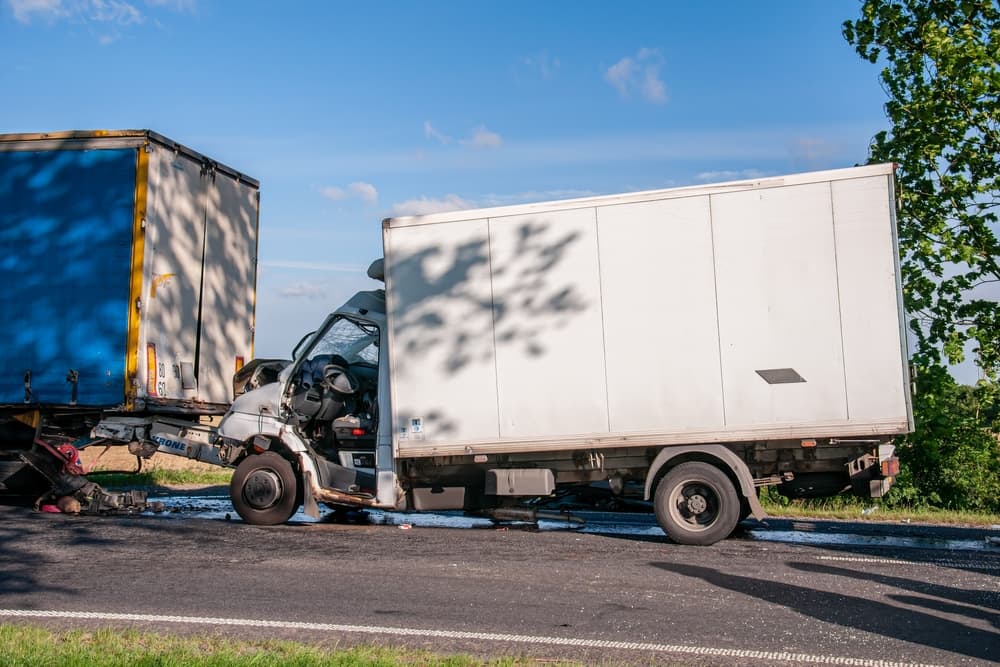
Accident reconstruction rebuilds a truck crash from skid marks, pavement gouges, crush damage, debris distribution, and the truck's onboard electronic data. A reconstructionist works backward from that physical record to establish speed, direction, and the sequence of events in the final seconds.
Physical Evidence and Crash Physics
The math is grounded in physics rather than opinion. Crush depth on a vehicle corresponds to the energy involved in the impact, and the length and pattern of tire marks indicate braking and loss of control. Those measurements produce speed estimates that withstand cross-examination.
Electronic Truck Data
Electronic data anchors the analysis. A commercial truck's onboard electronic systems can record road speed, throttle position, brake application, and hard-braking events, and how experts interpret black box data frequently determines the outcome of an accident reconstruction truck case.
When a driver claims to have been traveling 55, and the module reports 71, the dispute ends.
Testing Competing Crash Stories
Reconstruction also defeats false narratives. Carriers routinely argue that an injured motorist stopped abruptly or changed lanes without warning, and a reconstruction based on physical evidence either supports that claim or eliminates it.
This is a substantial part of how experts prove negligence in cases where the only other account comes from the driver who caused the crash.
Scene Mapping and Visualization
Modern reconstruction relies heavily on precise scene documentation. Laser scanning and aerial mapping capture the roadway, sight lines, and grade with measurements a jury can see rendered to scale.
That level of detail matters on curved ramps and blind intersections, where the question is often what the driver could actually see before impact.
How a Trucking Safety Expert Exposes Safety Violations
A trucking safety expert can identify violations of Federal Motor Carrier Safety Administration (FMCSA) rules and other safety standards that apply to commercial carriers and drivers.
Common issues include:
- Driver Qualifications: 49 C.F.R. Part 391 sets minimum qualification requirements for commercial drivers and duties for carriers that employ them.
- Unsafe Driving: The FMCSA governs how commercial motor vehicles must be operated.
- Hours of Service: 49 C.F.R. Part 395 limits driving and on-duty time and requires rest periods.
- Vehicle Maintenance: Regulations cover inspection, repair, and maintenance requirements.
- Cargo Securement: The FMCSA includes rules designed to keep cargo from shifting, spilling, or falling from a commercial vehicle.
These specialists have usually spent careers inside the industry as safety directors, compliance officers, or fleet managers.
Comparing the Carrier to Industry Standards
Their value lies in identifying what a properly run carrier would have done. A safety expert reviews the driver qualification file, training records, and maintenance history, then explains where the company departed from accepted industry practice.
Testimony that a carrier dispatched a driver already near the hours limit carries considerable weight with a jury.
Expanding Liability Beyond the Driver
When a trucking safety expert witness demonstrates that a company hired a driver with a documented record of violations, or deferred brake repairs across a fleet running I-20 through the Permian Basin, those facts can support liability against the corporation itself when it contributed to the crash.
Applying the Same Rules Across Texas
Freight volume makes truck accident cases common across Texas. Trucks moving through the Laredo port of entry, along the I-45 corridor between Houston and Dallas, and around the Houston Ship Channel operate under the same federal rules.
A safety expert measures the carrier's conduct against those standards regardless of where the crash occurred.
Shaping the Corporate Investigation
A safety expert's work also shapes how a case is questioned. Their review of company records identifies which policies, dispatch practices, and training gaps deserve scrutiny when corporate representatives are deposed.
Answers given under oath about a company's own safety manual are frequently more damaging than anything the driver said.
Determining the Value of Your Texas Truck Accident Case
You can’t know the full value of a serious truck accident case without understanding what your injuries will cost years from now. A Texas truck accident lawyer can work with medical experts, economists, vocational specialists, and life care planners to document those future losses before an insurer puts a small number on your claim.
Serious truck crash injuries often require care that extends well past the trial date. A victim may face additional surgeries, years of therapy, or permanent assistance. A physician's testimony can explain that long-term medical picture and what care will likely be needed.
Those future needs also have to be translated into financial terms. Economists and vocational experts can account for lost wages, reduced earning capacity, benefits you can no longer earn, and the cost of care that could continue for decades.
Several categories of loss often require expert analysis:
- Future Medical Care: Physicians can project the surgeries, therapy, medication, and equipment a specific injury could require over a lifetime.
- Lost Earning Capacity: Vocational experts can assess which jobs remain realistic given permanent physical restrictions.
- Lifetime Care Costs: Life care planners can estimate the cost of attendant care, home modifications, and assistive technology for catastrophic injuries.
- Household and Daily Impact: Specialists can document the tasks and activities you can no longer perform without help.
Without that work, an insurer can value the claim around the bills and wage losses already visible while overlooking costs that have not happened yet. That can leave you negotiating from a number that doesn’t reflect the full effect of the injury.
Defense experts often contest these figures directly. An insurer may retain a physician to review records and argue that an injury came from a preexisting condition or that future treatment is unnecessary.
Your lawyer can work with treating physicians and other experts who understand your actual medical history and can explain why those future losses belong in the claim.
When Does a Truck Accident Case Need an Expert Witness?
A Texas truck accident case may need an expert witness when fault is disputed, when injuries are severe or permanent, when multiple vehicles or parties are involved, or when the carrier's own experts have already been retained.
Major carriers retain their specialists immediately. Rapid response teams reach crash scenes within hours, taking measurements and photographs before a police report is even complete. An injured person working without comparable expertise is contesting an analysis that was completed before they left the hospital.
Severity of Your Injuries
Severity drives the decision as much as disputed fault. A case involving a spinal cord injury or a fatality requires medical and economic testimony to establish decades of consequences, and no jury in Texas will award those damages on estimates alone. The expenses must be documented by qualified professionals.
Why Timing Matters
Timing determines what any expert can accomplish. Skid marks fade within weeks on heavily traveled highways like I-10 outside El Paso, damaged trucks get repaired or sold, and electronic data is overwritten on a routine cycle.
Experts retained early can inspect the actual vehicle and the actual scene; those brought in late work from photographs.
FAQ for Truck Accident Expert Witnesses
Who Qualifies as a Truck Accident Expert Witness?
A truck accident expert witness is a qualified professional who provides opinion testimony about technical aspects of a commercial crash. Unlike a fact witness who saw the collision, an expert reviews evidence after the fact and explains what it establishes about speed, safety violations, injuries, or financial losses.
Do Both Sides Use Expert Witnesses in Texas Truck Accident Cases?
Both sides can use expert witnesses in contested truck cases. Trucking companies and their insurers retain reconstructionists and defense-oriented physicians, which is precisely why an injured person needs comparable specialists reviewing the same evidence.
Can an Expert Witness Testify About Federal Trucking Rules?
An expert witness can testify about federal trucking rules and how a carrier's conduct compares to them. A trucking safety expert explains what the regulations require and identifies specific departures, though the judge instructs the jury on the law itself.
Does Every Texas Truck Accident Case Go to Trial With Experts?
Most Texas truck accident cases resolve before trial, and strong expert work is often the reason. A reconstruction report contradicting the driver's account changes what an insurer is willing to pay, which frequently produces a settlement without testimony.
Who Decides Whether an Expert Is Qualified in a Texas Truck Injury Claim?
The judge decides whether an expert is qualified and whether the methods behind the opinion are reliable. Opposing counsel may challenge credentials and methodology before trial, and an expert who fails that review does not testify.
Let DFW Injury Lawyers Get the Experts You Need
Major carriers don’t defend these cases with adjusters alone. They retain engineers, defense physicians, and former safety directors who begin work within hours of a crash. DFW Injury Lawyers works with the specialists needed to build a truck accident case.
We bring them in early so they can inspect the truck and crash scene firsthand. Call our team at (888) 231-1341 or use our online form to get a free consultation with a Dallas truck accident lawyer.

Pedro “Peter” de la Cerda
Founder
Attorney Pedro “Peter” de la Cerda is a co-founder of DFW Injury Lawyers. As a young attorney looking for courtroom experience, Mr. de la Cerda began his career defending physicians, nurses, hospitals, trucking, and manufacturing companies in disputes involving personal injury, medical malpractice, products liability, and toxic tort. After seeing many people who were truly injured and deserving of fair compensation, however, Mr. de la Cerda was moved to cross the courtroom aisle and prosecute cases on behalf of plaintiffs in personal injury cases.
Author's Bio