In most wide-turn truck accidents in Texas, fault may fall on the truck driver for making an unsafe or poorly judged turn. However, another driver who tries to shoot up the right side of a turning truck can share the blame. At tight intersections, those two mistakes collide more often than you might think.
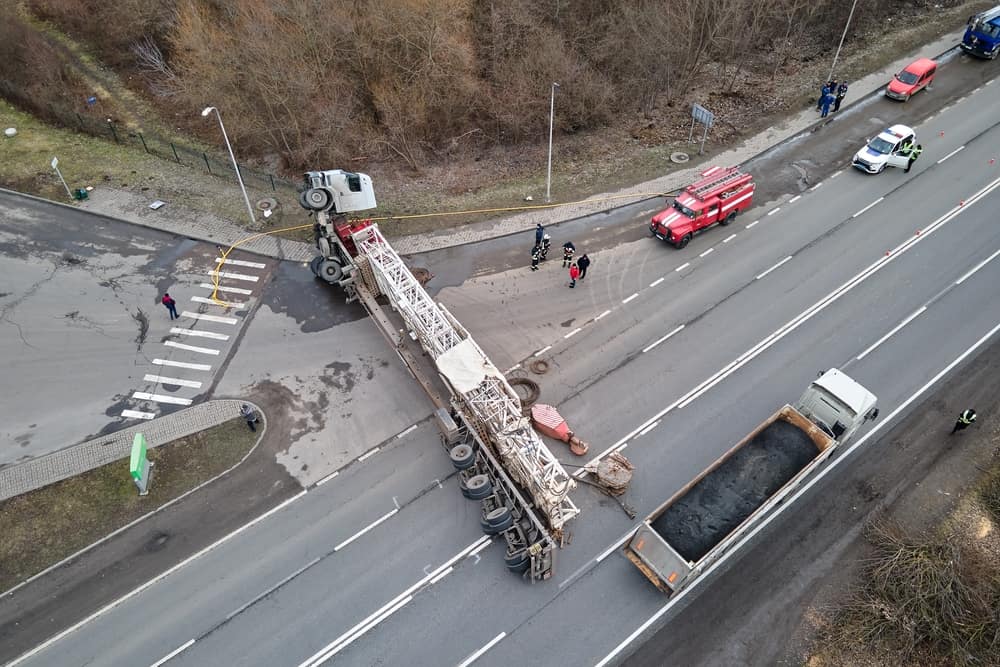
These crashes come down to a quirk of physics called off-tracking. When a big rig turns, its rear trailer wheels follow a tighter path than the cab, so the trailer cuts toward the inside of the turn and can cross a nearby lane or run over a curb.
A truck turning right sometimes drifts left first, which can fool nearby drivers into filling a gap that’s about to vanish. That reality is exactly why proving fault in a turning crash takes more than a quick glance.
A Dallas truck accident lawyer can break down the truck's path, the signals, and the timing to show who really caused the wreck.
Key Takeaways for Wide-Turn Truck Accidents in Texas
- A truck's rear wheels track tighter than its cab, so trailers cut toward the inside of the turn and can cross nearby lanes or curbs.
- Right-hook or squeeze-play crashes happen when a truck turning right traps a car or cyclist on its right side.
- The truck driver may be at fault for an unsafe turn, but a car that illegally passes a turning truck on the right can share the blame.
- Texas proportionate responsibility reduces your recovery by your share of fault and cuts it off entirely at 51%.
- Dashcam clips, traffic-camera footage, and the truck's own data can help establish who had the right of way and who did not.
Quick Answer: Who Is at Fault in a Wide-Turn Truck Accident in Texas?
The truck driver is at fault in a wide-turn truck accident if the crash resulted from an unsafe or poorly judged turn. Another driver can share the blame if they tried to pass a turning truck on the right.Who Is Responsible for a Semi-Truck Turning Accident?
Responsibility may fall on the truck driver, the trucking company, another motorist, or more than one party after a turning semi causes a wreck. Determining fault requires looking at who had the right of way, how the truck entered the turn, and whether anyone violated a traffic or safety rule.
The Truck Driver
The truck driver is responsible for completing a turn safely, which includes signaling early, checking mirrors, and giving up the turn when the path is not clear. A driver who swings wide without warning, or turns across a car they should have seen, falls short of that standard.
In professional driver training, spotting and avoiding the squeeze play is part of the job.
The Trucking Company
The trucking company can share liability when its choices put the driver in a position to fail. Weak turning-safety training, unrealistic delivery windows, or trucks sent out with broken mirrors and dead turn signals all point back to the carrier.
Companies may also be responsible for retaining drivers whose repeated unsafe-turn violations show they pose a danger on the road.
Another Driver or Cyclist
Another road user can share fault when they created the danger by passing a turning truck on the right. Texas law allows passing on the right only when the maneuver can be completed safely and without leaving the main-traveled portion of the roadway.
Even then, the truck driver's duty to turn safely doesn’t vanish just because someone else made a mistake.
How Do Wide-Turn and Right-Hook Truck Accidents Happen in Texas?
Wide-turn and right-hook truck accidents happen when a large truck needs extra room to turn, and a smaller vehicle ends up in the space the trailer sweeps through. The truck is not built to corner like a car. That single difference sets up a few classic collision patterns.
For instance, a truck turning right may first swing a little to the left to clear the corner, leaving what looks like an open gap on the right. A driver behind sees that gap, moves up to pass or turn, and gets caught when the trailer tracks toward the inside of the turn and closes the space.
Truckers have a nickname for that trap: the squeeze play. It’s one of several patterns that share DNA with other common 18-wheeler crash patterns.
These are the turning scenarios that cause the most harm:
- The Right Hook: A truck turning right cuts across a car, cyclist, or motorcyclist on its right, trapping them against the curb or under the trailer.
- The Wide Left Swing: A truck drifts left before a right turn and sideswipes a vehicle beside it or one that pulled up to pass.
- Off-Tracking: The trailer's rear wheels cut the corner and enter the space on the inside of the turn, striking a car that was traveling there legally or even a pedestrian on the sidewalk.
- The Blocked-Sightline Turn: A trucker turns without a clear view of the right side, where the no-zone hides a smaller vehicle entirely.
What Evidence Shows Who Caused a Turning Truck Crash?
Dashcam footage, traffic-camera video, electronic truck data, skid marks, vehicle damage, and witness statements can show who caused a turning truck crash. Because these wrecks happen quickly and the drivers may give conflicting accounts, neutral evidence often matters most.
Much of that proof is time-sensitive. Traffic-camera footage gets overwritten, the truck can be repaired, and scuff marks fade from the pavement.
A lawyer knows how to prove negligence in a truck crash and can act quickly to preserve evidence that shows whose movement violated the rules of the road.
The following evidence can help establish fault:
- Video From Every Angle: Dashcams, traffic cameras, and nearby business security footage can capture the turn, the signal, and the exact moment of impact.
- The Truck's Electronic Data: The engine control module can show speed, braking, and steering inputs, and signal data can reveal whether the driver ever warned anyone.
- Scene and Vehicle Evidence: Skid marks, scrape patterns, and the damage points on both vehicles help an expert map how the trailer swung and where the car actually sat.
What Can Compensation Cover After a Wide-Turn Truck Accident in Texas?
Compensation after a Texas wide-turn truck accident can reflect what the crash has already cost you, what it may cost in the future, and how the injuries have changed your daily life.
Cyclists, motorcyclists, and occupants of smaller vehicles often suffer the most serious harm when a trailer swings into their path.
The amount you can recover also depends on how Texas divides fault. Your compensation falls by your assigned percentage of responsibility, and you can’t get compensation if a jury finds you more than 50% at fault.
Your Immediate Costs
Emergency treatment, surgery, hospital stays, medication, and rehabilitation can create substantial bills soon after the crash. Compensation can also account for wages lost while your injuries keep you from working.
The Losses That Continue Into the Future
A serious head, spine, or orthopedic injury may require additional treatment long after the initial hospital stay. If lasting limitations reduce the kind of work you can perform or the income you can earn, the claim can include future medical costs and diminished earning capacity.
The Ways the Injury Changes Daily Life
Not every loss comes with a bill. Physical pain, mental anguish, reduced mobility, and the loss of independence or valued activities can also factor into compensation. Medical records, testimony from people close to you, and evidence of your daily limitations can help document those effects.
Reconstructing the Turn and Pinpointing the Driver’s Mistake
A Dallas truck accident lawyer can rebuild the truck’s entire turning path to show when the cab moved, where the trailer tracked, and whether the driver warned nearby motorists. Those details help separate an unsafe wide turn from an insurer’s claim that another driver caused the collision.
Rebuilding the Truck's Turning Path
The investigation starts by mapping the space each vehicle occupied before impact. Video, roadway measurements, scrape marks, and vehicle damage can show whether the truck swung across another lane, squeezed a car against the curb, or began turning while a cyclist or motorcyclist remained beside the trailer.
Electronic truck data can add timing to that picture. Speed, braking, steering activity, and turn-signal use may reveal whether the driver slowed enough or gave surrounding traffic adequate warning.
Challenging the Insurance Company's Version of the Crash
Your lawyer can then test the insurer’s version against the physical evidence. If the insurer claims you passed illegally on the right, the truck’s movements may instead show that you were already established in the lane before the driver began turning.
An accident reconstruction expert can combine those details into a clear explanation of how the collision occurred. That reconstruction also helps identify whether the trucking company shares fault.
Poor turn training, unrealistic delivery routes, or pressure to maneuver a large trailer through unsuitable streets may have contributed to the driver’s mistake.
By tracing the turn from the driver’s first movement through the moment of impact, your lawyer can build a claim around what the evidence shows rather than whichever story the insurer tells first.
FAQ for Wide-Turn Truck Accidents in Texas
How Long Do You Have to File a Truck Accident Lawsuit in Texas?
Texas generally gives you two years from the date of the truck crash to file a personal injury lawsuit. Missing that deadline can bar you from recovering compensation, although limited exceptions may apply.
What Is the Squeeze Play in a Texas Truck Crash?
The squeeze play is a crash where a truck turning right traps a vehicle on its right side. The truck often drifts left first, opening a gap that tempts a driver to move up, then swings right and closes it. The car gets caught, or squeezed, between the trailer and the curb.
Can a Cyclist Hit in a Right-Hook Accident Recover Compensation?
A cyclist hit in a right-hook truck accident can seek damages when the truck driver failed to turn safely. Right-hook crashes with cyclists are common and often severe, because the rider is hard to see and has no protection.
The key question is whether the driver should have spotted and yielded to you.
Does It Matter if the Trucker Used a Turn Signal?
Whether the trucker used a turn signal can matter greatly in a turning-accident claim. A missing or late signal is strong evidence that the driver failed to warn others before swinging wide. If the signal was on and clear, expect the defense to argue that the other driver ignored it.
Who Decides the Percentage of Fault in a Crash With a Turning Truck?
In a lawsuit, the jury decides each party's percentage of fault in a turning crash, guided by the evidence. Before trial, insurers and lawyers negotiate those percentages using the same proof. Either way, video, data, and expert analysis drive where the fault lands.
We’ll Preserve the Proof of How the Turn Happened

Video, electronic truck data, and scene evidence can disappear quickly after a wide-turn crash. DFW Injury Lawyers can secure that proof, reconstruct the truck’s path, and challenge any attempt to pin the collision on you.
Call DFW Injury Lawyers at (888) 231-1341 or complete our online form to learn how the Muscle can help your case.