Many Texas drivers have heard advice about keeping a safe following distance, but few know the specific rules that help prevent rear-end collisions.
One of the most effective defensive driving techniques is the 3/6 second rule, a guideline used nationwide to reduce crashes caused by tailgating. The rule helps drivers determine the minimum amount of space needed to stop safely in different conditions.
Understanding and applying this rule can significantly reduce accident risk, especially in Texas, where high speeds, heavy traffic, and sudden lane changes are common. Knowing how the 3/6 second rule works also helps determine liability after a collision.
Reach out to a Texas car accident lawyer at DFW Injury Lawyers who understands how the 3/6 second rule is used to prove fault in rear-end collisions and can fight for the compensation you deserve after a crash.
Key Takeaways:
- The 3/6 second rule helps drivers maintain safe following distances
- Texas roads often require increased space due to speed and traffic conditions
- Using this rule reduces rear-end crashes and liability claims
- Weather and road conditions may require even more distance
- Violating safe following distances can impact fault in Texas accidents
What Is the 3/6 Second Rule?
The 3/6 second rule is a defensive driving guideline used to determine how much space a driver should keep between their vehicle and the vehicle ahead.
In ideal conditions, drivers should allow at least three seconds of following distance. In poor conditions, such as rain, darkness, or heavy traffic patterns, that distance should increase to six seconds or more.
To apply the rule:
- Choose a fixed object on the road, such as a sign or light pole
- When the vehicle ahead passes that object, begin counting
- If you reach the object before three seconds, you are following too closely
The rule addresses one of the most common causes of crashes: insufficient stopping distance. At 60 mph, a vehicle travels nearly 90 feet per second. A driver who is only one second behind another vehicle may not have time to react, let alone stop.
Rear-end collisions are among the most frequent accidents in Texas. They often occur because drivers follow too closely, are distracted, or underestimate their stopping distance. The 3/6 second rule provides a simple, consistent method to prevent these incidents.
DFW Injury Lawyers frequently sees cases where failing to follow this rule leads to severe injuries and costly claims. Understanding this rule not only improves safety but also helps establish responsible driving behavior.
Why Following Distance Matters for Accident Prevention
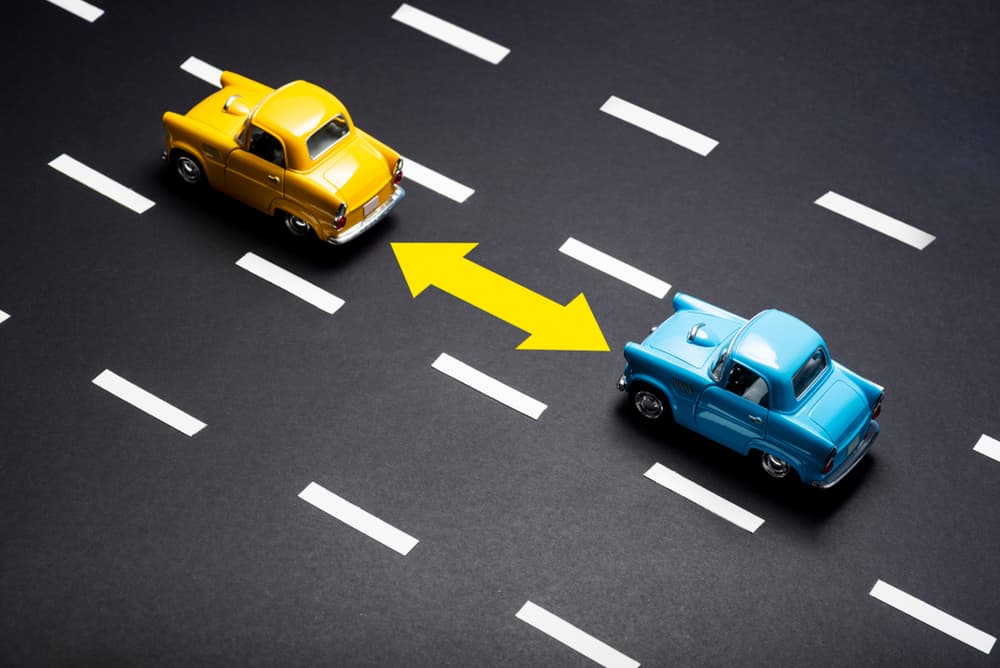
Maintaining a safe following distance gives drivers time to:
- Recognize hazards
- React appropriately
- Brake safely
- Maneuver around obstacles
- Avoid rear-ending another vehicle
Rear-end crashes may seem minor, but they can cause serious injuries, including:
- Whiplash
- Concussions
- Back and spinal injuries
- Airbag burns
- Facial injuries
These injuries often have long-term consequences, leading to medical bills, missed work, and lasting pain.
Following distance also affects accident severity. When drivers tailgate, they have little time to reduce speed before impact, increasing the force of the collision.
Texas roads present additional risks because of:
- High speed limits
- Heavy highway traffic
- Sudden merging
- Frequent lane changes
- Stop-and-go congestion
The 3/6 second rule allows drivers to adapt to these changing conditions. Even skilled drivers cannot predict when the vehicle ahead will brake suddenly, encounter debris, or experience a mechanical problem.
DFW Injury Lawyers encourage drivers to consistently apply safe following distances to reduce collision risks and protect themselves and others.
When to Use the 6-Second Rule Instead of 3
The three-second guideline applies only under ideal conditions. Many situations require additional space to maintain safety. Drivers should increase their following distance to at least six seconds when:
- Roads are wet or slick
- Visibility is reduced
- Driving at night
- Following larger vehicles like trucks or buses
- Towing trailers
- Driving in heavy traffic
- Approaching construction zones
Weather plays a major role. Rain, ice, or snow dramatically increases stopping distance. Even light drizzle can reduce tire traction.
Texas drivers often underestimate the impact of weather because storms can appear suddenly and road surfaces may remain slick long after rain stops.
Larger vehicles also require extra space because they block visibility. Drivers cannot see traffic conditions ahead when following closely behind trucks or SUVs.
Using the six-second rule reduces crash risk and shows responsible driving behavior, which can be important in legal claims.
How the 3/6 Second Rule Impacts Liability in Texas
Texas uses an at-fault system for car accidents, meaning the driver who causes the crash is responsible for damages. When a rear-end collision occurs, the following driver is often presumed at fault because they failed to maintain a safe distance.
Insurance companies frequently argue:
- The driver was tailgating
- They failed to control their speed
- They did not follow safe-distance guidelines
If a driver violates the 3/6 second rule, insurers may use that as evidence of negligence.
However, liability may shift if:
- The front driver stopped suddenly without reason
- Brake lights were not functioning
- The front driver reversed suddenly
- A vehicle cut into the lane unsafely
Even in these situations, following too closely can still reduce compensation under Texas’s comparative negligence rules.
DFW Injury Lawyers works to show how following distance contributed to or disproved fault. Proper understanding of safe driving rules can significantly affect claim outcomes.
Why Insurance Companies Care About Following Distance
Insurance companies closely analyze the following distance because it affects fault and payout amounts. When reviewing a claim, insurers may examine:
- Crash reports
- Vehicle damage patterns
- Driver statements
- Witness testimony
- Traffic camera footage
- Event data recorder information
If they determine a driver failed to maintain adequate distance, they may:
- Deny claims
- Reduce compensation
- Assign partial fault
- Delay payment
Insurance adjusters often argue that rear-end crashes are preventable and therefore indicate negligence. They may even use general traffic rules, such as the 3/6 second guideline, to justify decisions.
DFW Injury Lawyers challenges unfair interpretations and works to demonstrate when external factors contributed to the crash.
How Speed and Reaction Time Affect the Rule
The 3/6 second rule is based on average human reaction times and vehicle stopping distances. Most drivers need at least 1.5 seconds to recognize a hazard and begin braking. That reaction time increases when drivers are:
- Distracted
- Fatigued
- Under stress
- Experiencing impaired visibility
- Adjusting controls or using mobile devices
At higher speeds, even small delays become dangerous. For example:
- At 40 mph, a vehicle travels about 60 feet per second
- At 60 mph, that distance increases to nearly 90 feet per second
- At 75 mph, common on Texas highways, a vehicle travels over 110 feet per second
If a driver follows too closely, they may not have enough distance to slow down, especially when braking suddenly. This is why rear-end crashes often occur at high speeds and result in severe injuries.
Many drivers assume modern safety features such as anti-lock brakes or advanced driver assistance systems eliminate the need for safe following distances. However, these systems cannot overcome physics. Heavy vehicles, worn tires, road conditions, and mechanical issues all affect stopping ability.
Understanding how reaction time and speed relate to the 3/6 second rule reinforces the importance of maintaining space, particularly on fast-moving Texas highways like I-35, I-20, and the Dallas North Tollway.
The Role of Weather and Road Conditions
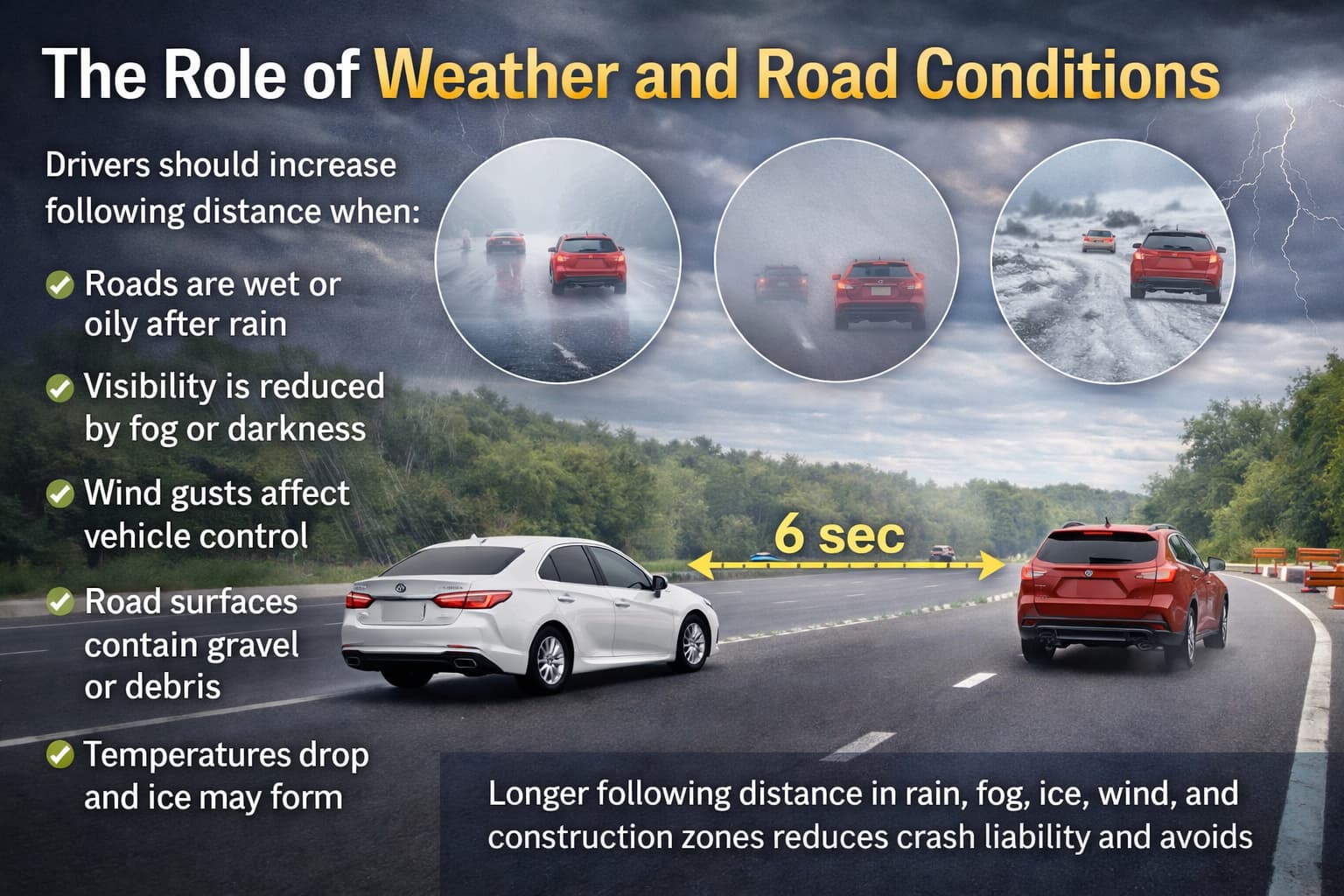
Weather conditions significantly affect stopping distance and traction. Rain, fog, ice, and even strong winds can increase crash risks. Texas weather can change rapidly, especially in North Texas where storms move in quickly and create slick roads.
Drivers should increase following distance when:
- Roads are wet or oily after rain
- Visibility is reduced by fog or darkness
- Wind gusts affect vehicle control
- Road surfaces contain gravel or debris
- Temperatures drop and ice may form
Wet pavement can double the stopping distance. Oil buildup on highways becomes extremely slick during the first minutes of rainfall. Many Texas drivers fail to adjust their following distance during rain because storms may be brief, leaving unexpectedly hazardous conditions.
Construction zones also require more space. Uneven pavement, barriers, and lane shifts increase the need for reaction time.
Applying the six-second rule or more during poor conditions helps reduce liability and prevents collisions that insurance companies often label as avoidable.
Why Large Vehicles Require Increased Distance
When following large vehicles such as:
- Commercial trucks
- Buses
- Delivery vans
- RVs
- SUVs towing trailers
Drivers should increase following distance beyond six seconds. Large vehicles block visibility, preventing drivers from seeing traffic patterns, brake lights ahead, or road hazards.
Commercial trucks require significantly more space to stop. A fully loaded tractor-trailer traveling at highway speeds may need 400 feet or more to come to a complete stop. If the vehicle behind follows too closely, they may be unable to avoid a collision if the truck brakes suddenly.
Additionally, large vehicles may:
- Kick up debris
- Lose cargo
- Create wind turbulence
- Make wide turns
These factors increase crash risks for tailgating drivers.
Because Texas has heavy truck traffic, especially near Dallas distribution centers and shipping hubs, understanding safe following distances around large vehicles is essential for accident prevention and liability protection.
How Technology Affects the 3/6 Second Rule
Modern vehicles increasingly include safety features designed to help prevent rear-end collisions, leading many drivers to believe that technology can replace safe following distances.
Features like adaptive cruise control, automatic emergency braking, lane-keeping assistance, and collision warning systems can improve safety, but they are not perfect and should never be used as a substitute for the 3/6 second rule.
Technology limitations include:
- Sensors obstructed by rain, snow, or dirt
- Delays in system activation
- Failure to detect motorcycles or small vehicles
- Reduced performance in curves or heavy traffic
- Software or calibration issues
Adaptive cruise control, for example, may maintain distance on open highways but struggle in stop-and-go traffic. Automatic emergency braking often activates only moments before impact, reducing crash severity rather than preventing it entirely. Drivers who rely too heavily on technology may react slower, assuming the vehicle will handle the situation.
Texas road conditions expose these weaknesses. Construction zones, sudden lane changes, and merging traffic can confuse vehicle systems. Large trucks may block radar and camera sensors, preventing accurate distance measurement. Weather conditions like heavy rain or dust storms can also interfere with detection.
Legally, drivers remain responsible for maintaining control of their vehicles. Insurance companies do not accept “the system failed” as a defense. If a crash occurs and the driver was following too closely, they may still be found negligent even if technology was active.
Using safety technology alongside the 3/6 second rule provides the greatest protection. The rule remains essential for preventing collisions and strengthening legal claims after an accident.
How to Apply the Rule in Real Driving Situations
Knowing the rule is one thing—using it consistently is another. Drivers can apply the 3/6 second rule effectively by practicing simple habits.
Effective strategies include:
- Choosing a roadside marker to measure distance
- Increasing space when someone tailgates
- Slowing down when visibility is reduced
- Leaving extra space when approaching intersections
- Avoiding sudden lane changes
If a driver feels pressured by someone behind them, the safest response is to increase distance ahead, not speed up. More space in front creates time to react even if the rear driver behaves aggressively.
Drivers should also adjust the rule based on:
- Vehicle weight
- Trailer towing
- Tire condition
- Driver fatigue
- Traffic patterns
Applying the rule consistently builds safer driving habits and protects legal rights if a crash occurs.
Legal Benefits of Following the Rule
Following the 3/6 second rule not only improves safety but also strengthens legal claims after a collision. Maintaining proper following distance demonstrates responsible driving behavior.
In legal cases, evidence showing a driver followed safe-distance guidelines can:
- Reduce assigned fault
- Support negligence claims against the other driver
- Increase potential compensation
- Protect against insurance arguments
Insurance companies routinely claim that rear-end crashes result from tailgating. Being able to show safe driving habits can significantly affect liability decisions.
DFW Injury Lawyers uses evidence such as:
- Dashcam footage
- Witness statements
- Accident reconstruction
- Vehicle data
to demonstrate whether following distance played a role. Understanding and applying the rule can make a meaningful difference in compensation outcomes.
Need Legal Help?
Maintaining a safe following distance protects you, your passengers, and others on the road. If you were injured in a Texas car accident and an insurance company is disputing fault, call DFW Injury Lawyers today at (972) 440-2320 to speak with a dedicated Texas personal injury attorney and learn how we can protect your rights and pursue the compensation you deserve.

Kevin L. Edwards
Founder
Attorney Kevin Edwards is a co-founder of DFW Injury lawyers. Over the last 15 years, Mr. Edwards has dedicated his practice to helping those who have been injured or harmed by the negligence, malfeasance, and/or recklessness of others.
Author's Bio