After a car wreck, it can feel like you’re suddenly in a fight against a giant. When that wreck is in a rental car, you’re not just facing another driver’s insurance company—you’re also up against the massive corporation that owns the car. They have teams of adjusters and a detailed contract designed to protect their bottom line, not your well-being. This can make figuring out who pays for a rental car accident in Texas feel like an impossible battle.
The answer depends on who was at fault and which insurance policy takes the lead, but you don't have to let these giants push you around. You have rights, and knowing them is your most powerful weapon.
Reach out to a Dallas car accident lawyer to protect your rights and determine who is responsible for paying after a rental car accident in Texas.
Key Takeaways about Who Pays after a Rental Car Accident in Texas
- Financial responsibility for a rental car accident in Texas is primarily determined by who was at fault for the collision.
- Several insurance policies may apply, including a driver's personal auto policy, insurance offered by the rental company, and potential benefits from a credit card.
- Texas operates under a modified comparative fault rule, which means a person's ability to recover compensation can be reduced or eliminated based on their percentage of fault.
- Rental car companies can sometimes be held responsible for an accident if they were negligent, such as by providing a poorly maintained vehicle.
- Drivers must understand the terms of their rental agreement and insurance coverage before an accident happens to be better prepared.
Understanding the Layers of Insurance Coverage
After a rental car accident, the question of "who pays" often leads to a tangled web of insurance policies. Unlike a typical accident in your personal vehicle, a rental car crash can involve your own insurance, the rental company’s coverage, and even benefits from your credit card. Let’s break down where the coverage might come from.
Your Personal Auto Insurance Policy
For most drivers who have their own car and insurance policy, this is usually the first line of defense. Many standard Texas auto insurance policies extend coverage to a rental car, treating it like a temporary replacement for your own vehicle. This means your liability, collision, and comprehensive coverage may apply.
However, it's never safe to assume. Before you rent a car, it's always a good idea to call your insurance agent and ask a few key questions:
- Does my policy cover rental cars?
- Are there any limitations? For instance, some policies only cover rentals for personal use, not for a business trip.
- Do my coverage limits meet the potential value of the rental car? Renting a luxury SUV when you drive a small sedan might mean your coverage isn't sufficient to replace it if it's totaled.
Checking these details beforehand can save you from a major financial headache if an accident occurs.
Insurance Offered by the Rental Car Company
When you stand at the rental counter, you're usually offered several insurance options. While it can be tempting to decline them all to save money, it's important to understand what they are and what they do.
- Collision Damage Waiver (CDW) or Loss Damage Waiver (LDW): This is one of the most common products offered. It's not technically insurance but rather a waiver. If you buy it, the rental company agrees not to hold you responsible for theft or damage to the rental car. Without it, you could be on the hook for the full cost of repairs, loss of use fees while the car is in the shop, and other administrative charges.
- Liability Insurance Supplement (LIS): Texas law requires rental companies to provide the state minimum liability coverage on their vehicles. However, these minimums can be quite low. LIS provides additional liability protection, often up to $1 million, if you cause an accident that injures someone else or damages their property. This can be crucial protection in a serious crash.
- Personal Accident Insurance (PAI): This coverage helps pay for medical expenses and provides accidental death benefits for you and your passengers. If you already have good health insurance and life insurance, this might be redundant.
- Personal Effects Coverage (PEC): This covers the theft of personal belongings from the rental car. Your homeowner's or renter's insurance policy often provides similar coverage, so it's good to check before purchasing this.
Understanding these options allows you to make an informed decision based on the gaps in your personal insurance policies.
Credit Card Rental Car Benefits
Many major credit card issuers, like Visa, Mastercard, and American Express, offer some level of rental car insurance as a cardholder perk. This can be a great benefit, but you need to know the rules. Most of the time, this coverage is secondary. This means it only pays for costs that your primary auto insurance doesn't cover, such as your deductible.
To activate this benefit, you typically must reserve and pay for the entire rental with that specific credit card and decline the rental company's CDW/LDW. The terms and conditions vary widely between cards, so you should always call the benefits administrator for your card to get the specifics in writing before you rely on it.
Who Is at Fault? Determining Liability in a Texas Rental Car Accident
Once the insurance options are laid out, the next critical piece of the puzzle is determining fault. Texas is an "at-fault" state, which means the person or party who caused the accident through their carelessness is responsible for the damages. This carelessness is legally known as negligence. Proving another driver was negligent is key to holding them financially accountable.
Texas's Modified Comparative Fault Rule
Life isn't always black and white, and sometimes, both drivers share some of the blame for a collision. Texas addresses this with a rule called modified comparative fault, also known as the 51% bar rule.
Here’s what it means in simple terms: You can seek compensation from another driver as long as you are not found to be 51% or more at fault for the accident. If you are found to be 50% or less at fault, your recovery will be reduced by your percentage of fault.
For example, if you have $100,000 in damages but are found to be 20% at fault, you can only recover 80%, or $80,000. If you are found 51% at fault, you recover nothing.
How Fault Impacts Who Pays
Determining fault directs which insurance policies will be tapped to cover the bills. Whether you were cruising down I-35 in Dallas or on a side street in Arlington, the same rules apply.
- The Other Driver Is at Fault: If another driver is 100% responsible for the accident, their liability insurance is on the hook for all the damages. This includes repairs to the rental car, your medical bills, lost income if you can't work, and other related losses. The rental company will pursue the at-fault driver's insurance to cover its vehicle, and you would file a personal injury claim with their insurer for your injuries.
- You Are at Fault: If you are deemed at fault for the crash, the financial responsibility falls on you and your insurance. The other driver's injuries and property damage would be covered by your personal auto liability policy or the LIS you purchased from the rental company. The damage to the rental car itself would be covered by the CDW/LDW (if you bought it) or the collision coverage from your personal policy. If you have neither, you could be personally responsible for the full cost.
- Shared Fault: This is where the 51% rule becomes so important. If both you and the other driver are partially at fault, both insurance companies will get involved. They will investigate the accident—reviewing police reports, witness statements, and traffic camera footage—to assign a percentage of fault to each driver. Your final compensation will then be adjusted accordingly.
These scenarios show why a thorough investigation is so critical after any rental car accident to correctly establish liability and protect your right to fair compensation.
What If the Rental Car Company Is Responsible?
In some rare cases, the responsible party isn't another driver but the rental car company itself. All businesses, including rental agencies from Lancaster to Garland, have a legal duty to ensure their products are safe for customers. When they fail in this duty, they can be held accountable.
Negligent Maintenance
Rental car companies must properly inspect and maintain their fleet. This means ensuring the vehicles have functioning brakes, safe tires, working headlights, and are free from other mechanical defects. If they rent out a car with a known or discoverable safety issue and that issue causes a crash, the company can be held liable.
For instance, if the brakes fail because the company neglected to service them, they could be responsible for the resulting damages. Proving this often requires an expert mechanic's inspection and a review of the vehicle's maintenance records.
Negligent Entrustment
This legal concept applies when a rental company irresponsibly rents a vehicle to someone they know, or should know, is not fit to drive. A clear example would be an agent renting a car to a person who is obviously intoxicated or doesn't have a valid driver's license. If that driver then causes an accident, the rental company could share in the liability for putting a dangerous driver on the road.
Steps to Protect Your Rights After a Rental Car Accident
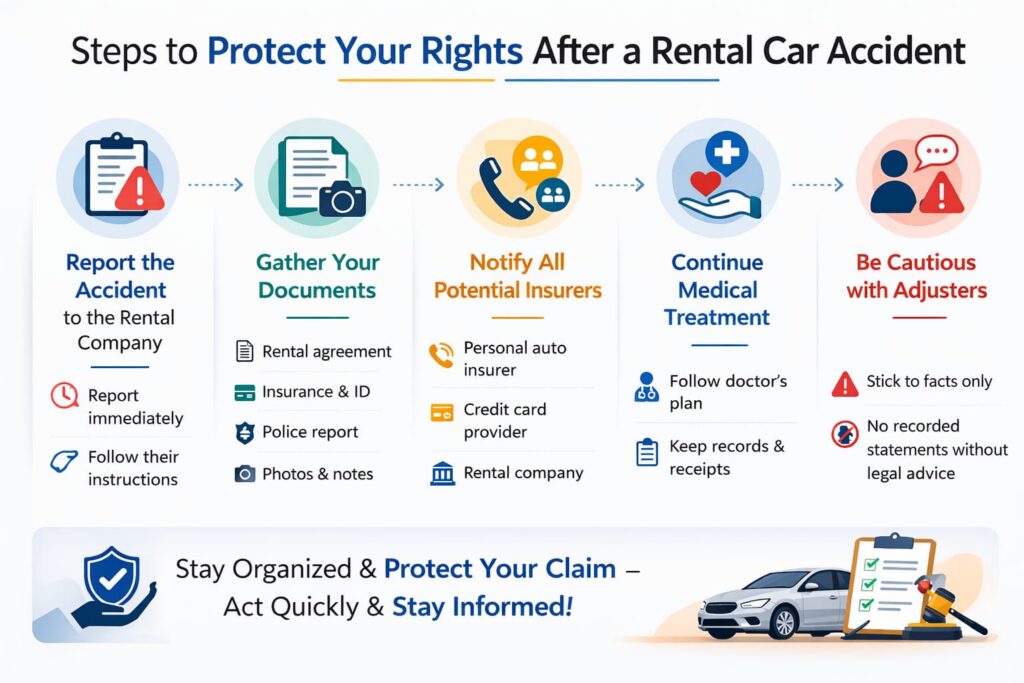
The actions you take in the days and weeks following a rental car accident are crucial for protecting your health and your financial well-being. Once you have addressed any immediate medical needs, it's time to focus on the claims process.
- Report the Accident to the Rental Company: Your rental agreement has a clause requiring you to report any accident immediately. Failing to do so could potentially void any insurance coverage you purchased from them. Follow their specific instructions for reporting an incident.
- Gather Your Documents: Keep all your paperwork organized in one place. This includes the rental agreement, your personal insurance card, any information exchanged with the other driver, the police report number, and photos of the scene and vehicle damage.
- Notify All Potential Insurers: Don't just call one insurance provider; call them all. Inform your personal auto insurer about the accident. If you plan to use your credit card’s benefits, call the number on the back of the card and start a claim with their benefits administrator. This ensures all potential sources of coverage are aware of the situation.
- Continue Medical Treatment: If you were injured, it is vital to follow your doctor's treatment plan. Gaps in treatment can be used by insurance companies to argue that your injuries weren't serious. Attending all appointments creates a clear record of your injuries and their impact on your life.
- Be Cautious When Speaking with Adjusters: Insurance adjusters from all sides will likely be calling you. It is important to be careful in these conversations. Stick to the basic facts of what happened, but avoid speculating about fault, downplaying your injuries, or giving a recorded statement without first seeking legal guidance.
Taking these deliberate steps can help streamline the claims process and strengthen your position if disputes arise over who should pay.
Rental Car Accident in Texas FAQs
Here are answers to some common questions we hear about rental car accidents.
What happens if I get in a rental car accident in Texas but I'm from another state?
Texas laws will generally apply to the accident itself, especially the rules of the road and the 51% fault determination. However, which insurance policy pays first (your out-of-state policy or the rental coverage) can depend on the specific terms of your personal insurance contract.
Does my personal insurance cover a rental car if I was using it for business?
Many personal auto policies have a "business use exclusion," meaning they will not cover you if you are using a vehicle, including a rental, for work purposes. If you were on a business trip, your employer's insurance or the rental coverage you purchased might be the primary source of payment.
What if an uninsured or underinsured driver hits my rental car?
If you have Uninsured/Underinsured Motorist (UM/UIM) coverage on your personal auto policy, it typically extends to you while you are in a rental car. This coverage is designed to pay for your injuries and, in some cases, property damage when the at-fault driver has no insurance or not enough insurance to cover your losses.
How long do I have to file a claim after a rental car accident in Texas?
In Texas, the statute of limitations for filing a personal injury lawsuit is generally two years from the date of the accident. If you miss this deadline, you may lose your right to seek compensation in court. It is important to act promptly to preserve your rights.
Should I accept the rental company's offer to handle everything?
While it may seem convenient, allowing the rental company or an insurance adjuster to "handle everything" may not be in your best interest. Their goal is to resolve the claim for the lowest possible cost. If you have been injured, it's wise to understand all of your legal options before agreeing to any settlement or signing any documents.
Get the Muscle You Need for Your Rental Car Accident Case
A rental car accident can create a confusing and difficult situation, pitting you against powerful insurance and rental corporations. You don't have to face them by yourself. At DFW Injury Lawyers, we are trial lawyers who are personally invested in seeing our clients get justice. When another party's carelessness causes you harm, you need a team that is armed and ready for battle.
Our mission is to fight for the rights of injured people across Dallas, Fort Worth, Oak Cliff, and the entire DFW metroplex. We prepare every case as if it's going to trial and refuse to accept quick, lowball settlements. With over half a billion dollars recovered for our clients, we have the experience and the determination to pursue the maximum compensation you deserve. If you were hurt in a rental car accident, let us be your muscle.
Contact us today for a free, no-obligation legal consultation with a dedicated Dallas personal injury attorney. We are ready to listen to your story and explain how we can help.

Kevin L. Edwards
Founder
Attorney Kevin Edwards is a co-founder of DFW Injury lawyers. Over the last 15 years, Mr. Edwards has dedicated his practice to helping those who have been injured or harmed by the negligence, malfeasance, and/or recklessness of others.
Author's Bio