The physical recovery from a serious injury is difficult enough without the added weight of financial worry. When dealing with hospital liens in a Dallas car accident claim, that weight can feel immense as medical bills and complex legal notices start arriving.
A letter from a hospital stating it has placed a claim on your future injury settlement can be a source of great confusion, especially if you have health insurance. This situation arises from specific Texas laws that give hospitals the right to place a lien on any settlement you might receive after a car accident.
A knowledgeable Dallas car accident lawyer works to stop unfair hospital debt after a crash in Texas by using legal tools to shield your settlement, including a Letter of Protection (LOP) that helps you keep getting treatment without paying upfront while your case moves forward.
Key Takeaways for Hospital Liens and Letters of Protection
- Texas law allows hospitals to place a lien on a personal injury settlement to recover the costs of certain emergency services provided shortly after the accident.
- A hospital can file a lien even if you have health insurance, often seeking to recover charges your insurer didn’t cover.
- A Letter of Protection is a legal document that an attorney sends to a medical provider, guaranteeing payment from a future settlement in exchange for immediate care.
- An LOP can sometimes prevent a hospital from filing a lien because it gives the provider another way to secure payment from the settlement.
- An attorney plays a vital part in verifying lien amounts, auditing medical bills for errors, and negotiating to reduce the final amount you must pay back from your settlement.
How Texas Law Empowers Hospitals To Claim Your Settlement

Hospital liens are rooted in Texas state law, which grants certain hospitals a direct interest in the financial compensation you may receive from the person or party who caused your injury. When you receive emergency services within 72 hours of an accident, the hospital can file a perfected lien, giving it a legal claim against any settlement or judgment from your case.
This right is exceptionally strong and is a primary reason why you cannot simply ignore bills from Parkland Memorial Hospital or Baylor University Medical Center. The hospital files the lien with the county clerk, formally notifying all parties, including the at-fault party's insurance company, of its financial interest.
Many people wonder why the hospital put a lien on their settlement even when they have health insurance. This is a common point of confusion. A lien may be filed for the charges allowed under state law, which can be higher than the negotiated rate your health insurance company pays.
The hospital may also place a lien for the portion of the bill that your insurance didn’t cover, such as deductibles, co-pays, or services deemed out-of-network. In effect, the hospital attempts to get a larger payment from your settlement than it would have received from your health plan.
The Letter of Protection: Your Financial Shield and Payment Bridge
While a lien is a tool used by a hospital to claim a piece of your recovery, a Letter of Protection (LOP) is a tool your Dallas car accident lawyer uses to protect you. An LOP allows you to get the medical treatment you need to heal without any upfront payment.
It serves as a financial shield, giving you breathing room while your personal injury case moves forward.
What Is a Letter of Protection?
An LOP is a written agreement that your attorney sends to your medical providers. It’s essentially an arrangement between the attorney and the provider stating that the provider will be paid from any settlement or court award you eventually receive.
In exchange for this understanding, the medical provider agrees to defer collection efforts and provide treatment on a credit basis. The doctor or facility gets an agreement for future payment, and you get the immediate care necessary for your recovery.
How an LOP Helps You Get Medical Care
After a serious Dallas car crash, you may need ongoing medical care, such as physical therapy, pain management, or even surgery. If you’re uninsured, underinsured, or simply cannot afford high deductibles and co-pays, getting this care is a huge challenge.
An LOP solves this problem by functioning as a payment bridge, connecting your current need for treatment with your future ability to pay from a settlement.
Many trusted Dallas-area doctors and medical facilities accept LOPs because they have established relationships with personal injury law firms. They’re willing to provide services based on the attorney’s guarantee.
This system is crucial for a person’s physical recovery, as delays in treatment can lead to worse medical outcomes and may also weaken a personal injury claim. An LOP creates a clear path to wellness that isn’t blocked by your current financial situation.
Here are a few ways an LOP directly aids your case and recovery:
- Access to Treatment: You receive necessary medical attention from qualified providers without paying out of pocket, allowing you to focus completely on healing.
- Documentation of Injuries: Continuous medical treatment creates a clear record of your injuries and their severity, which is vital evidence for your Texas personal injury claim.
- No Collections Activity: The provider agrees to pause all billing and collection actions while your case is pending, removing a significant source of stress.
- Negotiation Power: Your attorney can negotiate the medical bills covered by the LOP before paying them from the settlement, often leading to a reduction in the final amount.
The Dangers of Unchecked Medical Provider Liens
When hospital liens aren’t properly managed, they present serious risks to your financial well-being. A hospital lien is not a passive document; it’s an active claim that can significantly reduce, or even eliminate, the net compensation you receive from a Dallas car crash settlement.
Allowing liens to go unchecked opens the door for hospitals to claim more than what is fair, leaving you with little to no funds to cover other damages like lost wages or pain and suffering.
An experienced Dallas personal injury attorney understands these dangers and takes proactive steps to protect your interests from the beginning. They see a lien not as an absolute demand for payment but as the starting point for a negotiation. Your attorney's job is to analyze the lien, question the billing, and ultimately fight to maximize what you take home.
Risks associated with unmanaged medical provider liens include:
- Inflated Charges: Liens may be filed for the hospital's full "chargemaster" rates, which are artificially high prices that are rarely paid by health insurance companies.
- Reduced Settlement Offers: The at-fault party's insurer knows the lien must be addressed and may use its existence to make a lower settlement offer, arguing that a large portion of it will go to the hospital anyway.
- Difficulty Settling: A large lien can complicate settlement negotiations, sometimes causing a deadlock if the lien amount is greater than the available insurance policy limits.
- Loss of Personal Assets: In very rare cases, if a case is settled and a valid lien isn’t paid, a hospital may have the right to sue you directly to recover the debt.
When Do Hospital Liens and LOPs Come Into Play in Texas Accidents?
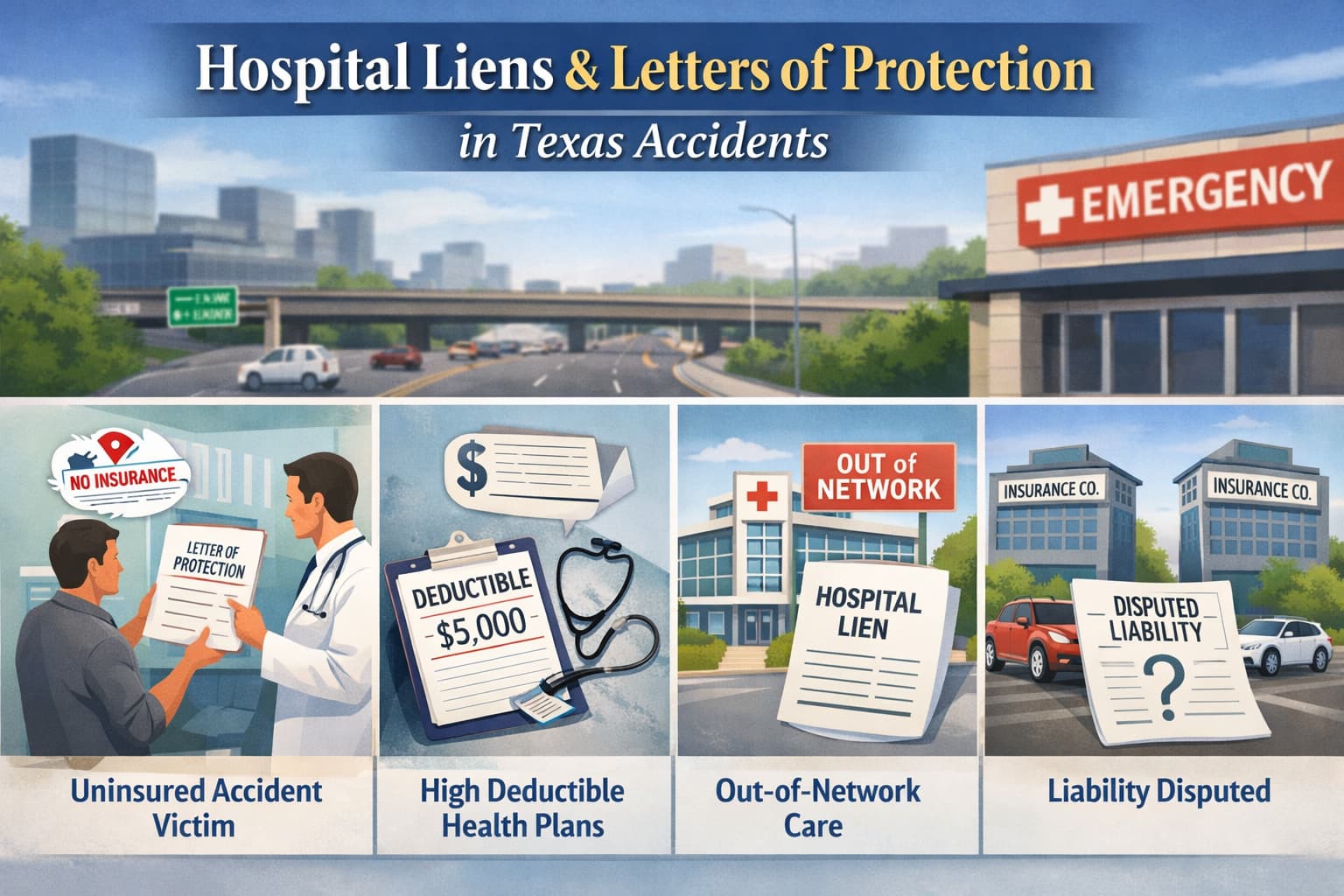
The legal tools of hospital liens and Letters of Protection appear in many different types of personal injury cases across the Dallas-Fort Worth Metroplex. From multi-car pileups on I-20 to collisions involving pedestrians in neighborhoods like Bishop Arts or Uptown, the financial fallout can be just as challenging as the physical recovery.
Your attorney will identify the right strategy for your unique circumstances to get you the care you need and protect your future compensation.
These common situations illustrate the importance of using an LOP:
- The Uninsured Accident Victim: When you have no health insurance, an LOP is often one way to get necessary medical care from surgeons or physical therapists, bridging the gap until your case settles.
- High-Deductible Health Plans: Even with insurance, a $5,000 or $10,000 deductible can be an impossible barrier to medical care. An LOP allows you to get treatment now, and your deductible can be paid from the settlement later.
- Out-of-Network Emergency Care: A crash can land you at the nearest hospital, which may be out-of-network for your insurance. A hospital may file a lien for the balance your insurer refuses to pay, requiring an attorney to negotiate the bill down.
- Liability Is Disputed: If the insurance companies are arguing over who was at fault, it can be months or longer before any payments are made. An LOP guarantees that your doctor will be paid once the case is resolved, regardless of any delay.
FAQ for Hospital Liens and Letters of Protection
How Do I Know if a Hospital Filed a Lien Against Me?
Texas law requires a hospital to provide you with written notice that a lien has been filed. The hospital typically sends this notice via regular mail to your last known address. Additionally, the hospital files the lien as a public record with the county clerk in the county where you received the medical services, so it can be found through a public records search.
Can a Hospital Lien Take All of My Personal Injury Settlement?
In cases where medical bills are extremely high and the available insurance policy is small, a hospital lien may consume most or all of a settlement. However, a Dallas personal injury attorney's job is to negotiate with the hospital to reduce the lien amount.
Your lawyer works to achieve a compromise so that the hospital receives a fair payment and you still receive compensation for your other damages.
What Happens if I Settle My Case but Don’t Pay the Lien?
If you or your attorney fails to pay a valid hospital lien from your settlement funds, the hospital may sue you directly for the unpaid balance. They can also sue the at-fault party’s insurance company that paid the settlement, which is why insurers are very careful to confirm all liens are resolved before releasing funds.
What Is a Letter of Protection?
A Letter of Protection is a tool used by your Dallas car accident attorney on your behalf to help you get medical care by guaranteeing future payment to a provider. An LOP is cooperative, whereas a hospital lien is adversarial.
Why Are Hospital Liens a Part of Texas Injury Claims?
Texas law created hospital liens to help hospitals recover costs, especially in cases involving uninsured patients. However, the system has become complicated as medical billing practices have grown more aggressive.
Hospitals can claim charges under the Texas hospital lien law, which may exceed what health insurance would pay. This creates a large gap between the billed amount and what might be considered a reasonable charge, leading to intense negotiations to protect an injury victim's settlement.
Get the Protection and Care You Need
Handling the financial side of a personal injury claim can be complex, but you don’t have to do it alone. The legal system in Texas provides tools to help you get care and challenge unfair debts. DFW Injury Lawyers fights to shield our clients from aggressive medical billing and collection practices.
We manage these financial pressures so you can focus on what matters most: your health. If you received a lien notice or are worried about paying for medical care after a car accident in Texas, complete our online form to learn how we can help.

Kevin L. Edwards
Founder
Attorney Kevin Edwards is a co-founder of DFW Injury lawyers. Over the last 15 years, Mr. Edwards has dedicated his practice to helping those who have been injured or harmed by the negligence, malfeasance, and/or recklessness of others.
Author's Bio