Securing quality evidence after a traumatic brain injury (TBI) in Arlington is often the deciding factor between a denied claim and a fair settlement. After you get hurt, you expect doctors to pinpoint what happened, but standard emergency room scans often miss subtle brain damage. That gap creates a common problem: you feel the symptoms, but the insurance company argues that you’re fine.
This gap makes proving a mild TBI difficult for many Texas families. Insurance adjusters know that if a CT scan looks clean, they can argue the injury doesn’t exist. They might say your headaches or memory loss are just stress. However, medical documentation can tell a different story.
An Arlington traumatic brain injury lawyer understands how to bridge this gap between your symptoms and the proof you need. They move beyond basic scans and use advanced tools that show injuries that basic scans can miss.
Key Takeaways for Collecting Brain Injury Evidence in Arlington
- Standard CT scans and MRIs often miss microscopic tearing in brain fibers known as axonal shearing.
- Advanced scans, such as Diffusion Tensor Imaging (DTI), track water movement in the brain to detect hidden damage.
- Family members and coworkers serve as vital witnesses who can verify personality changes.
- Neuropsychological testing measures brain function and speed rather than just physical structure.
- Insurance companies frequently use "normal" ER scans to deny valid brain injury claims, but an attorney can help you overcome a denial.
Why Do Standard Scans Often Miss Brain Injuries in Arlington?
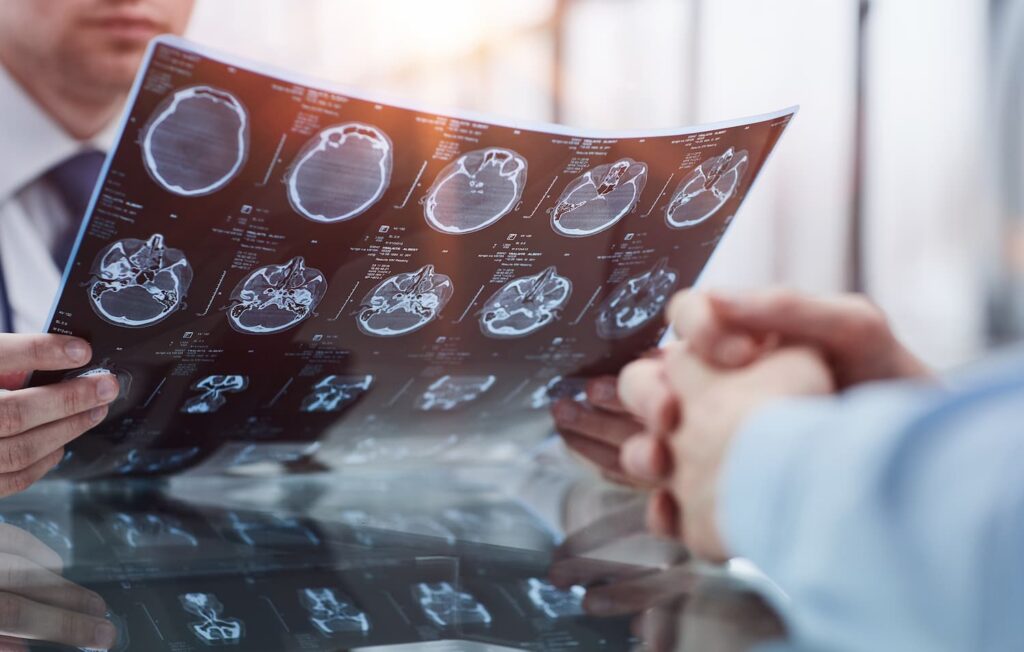
Most people rush to facilities like Texas Health Arlington Memorial or Medical City Arlington after a crash, where doctors use CT scans to look for life-threatening issues. These scans work well for finding a skull fracture or a large pool of blood. However, they’re not designed to find tiny tears in the brain's wiring.
A CT scan is like a map of a highway system that shows the roads but not the potholes. You might have microscopic damage called axonal shearing. This happens when the brain slams back and forth inside the skull, and the long connecting fibers, or axons, stretch and tear.
A standard CT scan often doesn’t have the resolution to show this damage, and a basic MRI may also miss it. When a scan comes back negative, the insurance company might argue that you’re not really hurt at all. They may cite the lack of brain injury evidence in your Arlington claim to reject paying for your medical care.
Reasons why traditional scans miss brain damage:
- Resolution Limits: The pixels on a standard scan are too large to show microscopic tears in neural pathways.
- Wrong Focus: CT scans focus on bone and acute bleeding, not the subtle bruising of soft tissue.
- Timing Issues: Some brain swelling or damage doesn’t show up until days after the initial scan takes place.
- Technology Gap: Some ERs use 1.5 Tesla MRI scanners instead of 3 Tesla, which can limit fine detail.
How Advanced Imaging Strengthens an Arlington TBI Claim
To win a TBI case in Arlington, you often need objective proof that a jury can see with their own eyes. Since a standard MRI might miss the problem, lawyers turn to advanced neuroimaging. One of the most powerful tools is Diffusion Tensor Imaging, which personal injury cases often rely on.
This technology doesn’t just take a picture of the brain; it analyzes the movement of water within the brain’s white matter. DTI scans track the movement of water molecules along the brain's white matter tracts.
Think of your brain's wiring like a garden hose. If the hose is in good shape, water flows through it in one direction. If the hose has pinhole leaks, the water sprays out to the sides. DTI measures this flow, called Fractional Anisotropy.
If the scan shows water moving in the wrong direction, it can indicate injury to the brain’s wiring. This provides a colorful image that can highlight areas of concern and make it harder for insurance adjusters to argue. They can claim you are faking a headache, but they’ll have a tougher time challenging a map of water diffusion in your brain.
Using tools like DTI, Susceptibility Weighted Imaging (SWI), or Volumetric Analysis changes the conversation. It turns a subjective complaint into medical evidence that can support your claim.
Advanced testing includes:
- Diffusion Tensor Imaging: This scan maps the white matter tracts and shows interruptions in the brain's communication network.
- Susceptibility Weighted Imaging: This sensitive MRI sequence detects tiny remnants of blood (micro-hemorrhage) that standard scans miss.
- Positron Emission Tomography (PET): This test measures how the brain uses sugar (glucose) to show areas of low activity or damage.
- Volumetric Analysis: This software compares the size of your brain structures to normative data to check for shrinkage or atrophy.
Can Witness Testimony Prove an Invisible Injury?
Medical scans are powerful, but they’re not the only form of brain injury evidence that can bolster your Arlington personal injury claim. Sometimes the best proof comes from the people who know you best.
A TBI often changes who a person is, giving a victim a shorter temper, trouble sleeping, or difficulty finishing sentences. A scan cannot capture how these changes affect your marriage or your job. Your Arlington TBI lawyer can call upon lay witnesses, specifically your coworkers, spouse, or friends.
A coworker might testify that before the wreck on I-20, you handled complex tasks easily, but now you forget simple instructions. Your spouse might explain that you used to be patient but now have sudden outbursts of anger. This testimony paints a picture of the before-and-after that numbers on a spreadsheet cannot match.
Personal evidence is vital for proving mild TBI in Texas. Jurors understand human stories. When they hear consistent stories from multiple people about your personality shift, it can validate the medical claims. It shows the real-world impact of the injury and connects the dots between a crash on Cooper Street and the daily struggles you face months later.
Your attorney may call on:
- Work Supervisors: They can explain a drop in productivity, missed deadlines, or the inability to multitask after the accident.
- Family Members: Spouses or children can describe changes in mood, sleep patterns, or the ability to handle household chores.
- Community Leaders: A pastor or coach can testify about your withdrawal from social activities or volunteer work.
- Long-time Friends: They can offer specific examples of memory lapses or confusion that never happened before the injury.
The Importance of Functional in an ArlingtonTBI Claim

Pictures of the brain are important, but measuring how the brain functions is just as critical. This is where neuropsychological testing comes into play in an Arlington TBI claim. This series tests measures specific brain skills like memory, attention, problem-solving, and speed. Tests produce objective data that can support a traumatic brain injury diagnosis.
If you suffered a blow to the head after a car crash on Division Street, you might feel slow or foggy. A neuropsychologist can test your reaction time and compare it to people of your same age and education level.
If you have a master's degree but score in the 10th percentile for processing speed, the loss of function is a red flag. These tests can reveal deficits in the frontal lobe, which controls planning and emotional regulation.
This data is hard for the defense to dismiss. By combining these test scores with Diffusion Tensor Imaging evidence, you create a solid foundation for your claim. It shows that the injury is measurable and supported by medical testing.
Functional testing often checks for:
- Executive Function: This tests your ability to plan, organize, and manage time effectively.
- Information Processing Speed: This measures how quickly your brain can take in new information and react to it.
- Verbal and Visual Memory: This checks your ability to recall words, stories, or images after a short delay.
- Emotional Regulation: Assessments can reveal anxiety, depression, or irritability that may be associated with the trauma.
Why You Need an Arlington Traumatic Brain Injury Lawyer
Handling a brain injury case in Arlington by yourself puts you at a disadvantage. Collecting brain injury evidence in Arlington requires resources and access to specialists. An attorney can front the costs for advanced scans like DTI or PET that insurance might refuse to cover initially and which neurologists in DFW understand the legal requirements for medical reports.
Your Arlington TBI attorney shields you from the stress of the legal process, including worrying about the statute of limitations. Brain injuries often cause cognitive fatigue, and dealing with aggressive adjusters or complex paperwork might make your symptoms worse.
Your lawyer handles the filings, the calls, and the arguments. Experienced law firms know not only how to get the brain injury evidence you need, but how to present it to a jury in a simple and understandable way.
Validating your injury is about more than just money; it’s about accessing the rehabilitation you need. Advanced therapies for TBI can be expensive. A strong legal case helps secure the funds for long-term care, vocational training, and ongoing medical support. An Arlington traumatic brain injury attorney can build a case to pursue these damages as well as all of your other losses.
FAQ for Collecting Brain Injury Evidence in Arlington
Why Did My MRI Come Back Normal if I Still Have Headaches?
Standard MRIs found in most hospitals are designed to see large structural problems like tumors or bleeding. They often lack the resolution to see microscopic tears in the brain's white matter. You may need a stronger scan, like a 3 Tesla MRI or DTI, to look for signs of injury that basic imaging can miss.
What Is the Best Objective Proof of Traumatic Brain Injury?
There is no single "best" proof, but a combination of evidence works best when building an Arlington TBI claim. This usually includes advanced imaging like DTI to show changes consistent with injury, neuropsychological testing to show functional loss, and witness testimony to show lifestyle changes. This three-part approach is much harder for insurers to dispute.
Can I Collect Evidence for an Arlington Brain Injury Claim on My Own?
Traumatic brain injuries often involve microscopic damage that won’t show up on standard ER imaging, so documenting the injury may require advanced neuroimaging and specialist follow-up. A lawyer can help you identify the right providers and testing, then request, organize, and curate the medical records, imaging, and symptom documentation so it tells a consistent story.
Beyond medical proof, your lawyer needs to prove that another party was negligent and therefore liable for your injuries. They can do this by collecting witness statements, securing camera footage and crash reports, and preserving phone or vehicle data when relevant.
How Does Diffusion Tensor Imaging Evidence Work in Court?
Diffusion Tensor Imaging produces color-coded maps of the brain's wiring. In court, these images allow a jury to see areas where the neural pathways may look disrupted. It turns a complex medical concept into a visual aid that can make the injury easier for the jury to understand.
Will My Health Insurance Cover the Cost of Advanced Brain Scans?
Health insurers often deny advanced scans like DTI, calling them experimental or unnecessary. In an Arlington personal injury case, your lawyer might work with medical providers who agree to wait for payment until the case settles. This allows you to get the diagnostic tests you need without paying up front.
Get Help Securing Your Brain Injury Evidence in Arlington
At DFW Injury Lawyers, we know that living with a brain injury feels isolating. You may look fine on the outside, but your world has changed on the inside. Our team knows what brain injury evidence matters in Arlington personal injury claims and how to get it.
Contact our Arlington personal injury attorneys today to discuss your case for free. We’ll fight to get the invisible injury recognized and the support you need to move forward.

Pedro “Peter” de la Cerda
Founder
Attorney Pedro “Peter” de la Cerda is a co-founder of DFW Injury Lawyers. As a young attorney looking for courtroom experience, Mr. de la Cerda began his career defending physicians, nurses, hospitals, trucking, and manufacturing companies in disputes involving personal injury, medical malpractice, products liability, and toxic tort. After seeing many people who were truly injured and deserving of fair compensation, however, Mr. de la Cerda was moved to cross the courtroom aisle and prosecute cases on behalf of plaintiffs in personal injury cases.
Author's Bio