Choosing legal representation after an injury is a major decision. The most important questions to ask an injury lawyer before hiring them focus on their specific experience with cases like yours, their approach to communication, and how their fees are structured. Getting clear answers on these topics helps you find a strong advocate who is the right fit for your situation and can help you pursue the compensation you deserve. This preparation sets the foundation for a strong working relationship built on trust and transparency.
Key Takeaways about Questions to Ask a Personal Injury Lawyer
- An attorney's direct experience with specific injury types, such as truck accidents or brain injuries, is a critical factor in their ability to handle a case effectively.
- Understanding the law firm's communication policy, including who will be the primary contact and how often updates are provided, is essential for a positive client experience.
- Clarifying the fee structure, particularly the contingency fee percentage and how case-related costs are handled, prevents future misunderstandings.
- A lawyer should be able to discuss the potential strengths and challenges of a case without making any promises or guarantees about the outcome.
- Inquiring about an attorney's trial experience reveals their readiness to take a case to court if a fair settlement cannot be reached.
Understanding an Attorney’s Background and Relevant Experience

When you first meet with a potential injury lawyer, your goal is to understand if they have the right background to handle your specific case. Not all lawyers handle the same types of cases, and experience matters. An attorney who frequently works on car accident claims in Dallas will have a different set of skills than one who primarily handles business contracts. You need someone who understands the unique challenges of personal injury law in Texas.
A great starting point is to ask about their primary areas of practice. While many firms handle various personal injury matters, you want to know if they have a strong record with cases similar to yours, whether it was a motorcycle accident on the I-35 express lane or a slip and fall at a Garland shopping center.
Questions to Ask About a Lawyer’s Experience
Here are some specific questions to help you gauge their background and determine if they are the right fit for you:
- How much of your practice is dedicated to personal injury cases?
- Have you handled cases involving my specific type of injury (e.g., traumatic brain injury, wrongful death) before?
- What is your experience with cases in Dallas County or Tarrant County courts?
- Can you describe your experience in going up against large insurance companies?
Asking these questions gives you a clearer picture of their professional history and their familiarity with the journey you are about to begin.
An equally important topic is their trial experience. Many personal injury cases are settled out of court, but you want an attorney who isn't afraid to take a case to trial if the insurance company refuses to offer a fair settlement.
Their willingness to fight in the courtroom can be a powerful motivator for the other side to negotiate in good faith. Ask them what percentage of their cases go to trial and about their comfort level in front of a judge and jury.
Clarifying Communication and Case Management
Feeling supported and informed throughout your case is crucial. A lack of communication is one of the most common frustrations people have with their legal representatives. Before you hire anyone, you should have a clear understanding of how the firm communicates with its clients and who will be managing your case day-to-day.
You might be meeting with a partner at the firm, but will you be working with them directly? Or will your case be handled primarily by another attorney or a paralegal? There is no right or wrong answer, but you deserve to know who your main point of contact will be. This person will be your go-to for updates and questions.
Here are a few things you should establish regarding communication:
- Who is my primary contact? Find out the name and role of the person who will be providing you with regular updates on your case.
- How often can I expect to hear from you? Will you receive updates monthly, bi-weekly, or only when there’s a major development? Setting expectations early can prevent a lot of stress.
- What is the best way to reach you if I have a question? Ask if they prefer phone calls, emails, or scheduled meetings. You should also ask how long it typically takes for them to respond to client inquiries.
A well-defined communication plan shows that a law firm is organized and values its clients, making the entire legal process feel more manageable.
Discussing Fees and Costs: What to Expect
The cost of legal representation is a major concern for anyone recovering from an injury. Fortunately, most personal injury lawyers work on a contingency fee basis. In simple terms, this means you don’t pay any attorney’s fees unless they win your case, either through a settlement or a court verdict. The fee is a percentage of the total recovery.
This arrangement allows injured people to get quality legal help without paying out of pocket. However, you need to understand the specifics of the agreement before you sign anything. The percentage can vary, so it's a vital question to ask.
Beyond the attorney's fee, there are also case costs. These are the expenses required to build a strong case, and they are separate from the lawyer’s fee.
Some common case costs include:
- Court filing fees
- Costs for obtaining medical records and police reports
- Fees for hiring investigators or expert witnesses (like accident reconstructionists or medical professionals)
- Deposition and transcript costs
It is important to ask whether these costs are deducted from your settlement before or after the attorney’s fee is calculated. You should also ask if you are responsible for these costs if the case is not successful. A transparent lawyer will be happy to walk you through their fee agreement and explain every detail.
How Will a Lawyer Evaluate Your Specific Case?
During your initial consultation, an attorney will ask you many questions about your accident and injuries. This is also your opportunity to see how they analyze your situation. While they cannot predict the future or guarantee a result, a capable lawyer can give you an honest assessment of your case based on the information you provide.
They should be able to identify the potential strengths and weaknesses of your claim. For instance, having a detailed police report and eyewitnesses from the scene of a truck accident in Arlington might be a major strength. On the other hand, a delay in seeking medical treatment could be a challenge to address.
Important Questions About Your Case Evaluation
- Based on what you know so far, what are the biggest strengths of my case?
- What potential challenges or weaknesses do you see?
- What kind of evidence will we need to gather to build a strong claim?
- What is the statute of limitations for my case?
The statute of limitations is a critical legal term that means the deadline for filing a lawsuit. In Texas, the general statute of limitations for personal injury cases is two years from the date of the injury. Missing this deadline can mean losing your right to seek compensation forever, which is why it's one of the most important questions to ask an injury lawyer before hiring them.
A thoughtful answer to these questions demonstrates that the attorney is already thinking strategically about your case. They should be able to outline a general plan of action and explain the next steps in the process, giving you a sense of what to expect moving forward.
Red Flags to Watch for When Hiring an Injury Lawyer
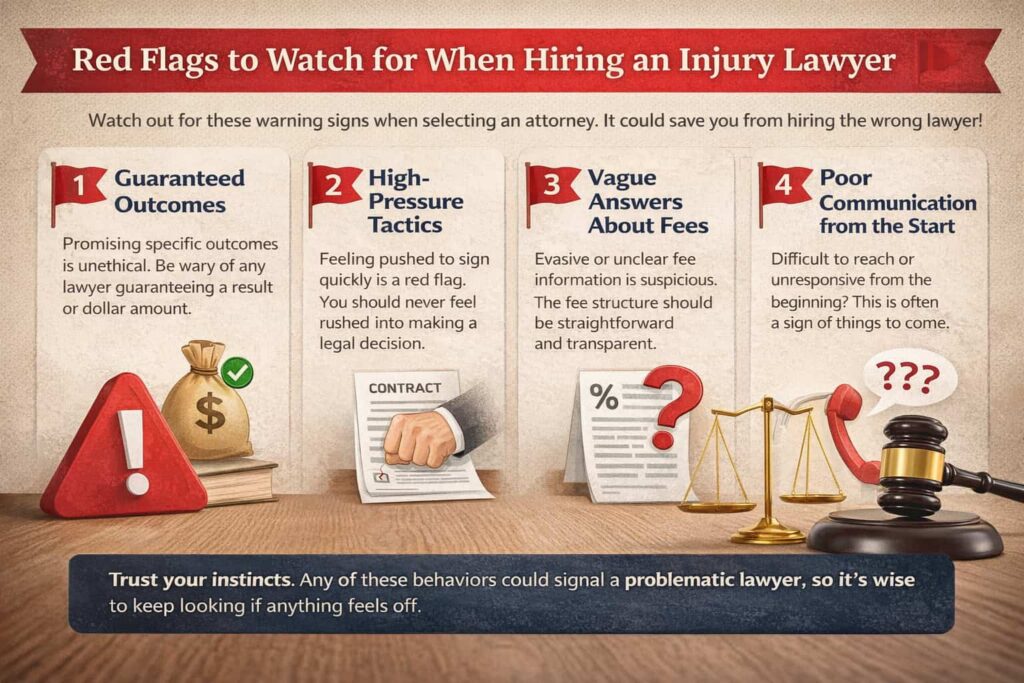
Just as important as knowing what to look for is knowing what to avoid. When you’re meeting with potential attorneys, certain behaviors should give you pause. Your relationship with your lawyer is built on trust, and any sign of questionable ethics or unprofessionalism is a serious red flag. After all, this is the person who will be advocating for your future well-being.
Keep an eye out for these warning signs:
- Guaranteed Outcomes: It is unethical for any attorney to promise a specific outcome or dollar amount. A responsible lawyer will talk about potential results and case value based on experience, but they will never make a guarantee.
- High-Pressure Tactics: You should never feel pressured to sign a contract on the spot. A reputable attorney will encourage you to take your time, read the agreement carefully, and make a decision you are comfortable with.
- Vague Answers About Fees: If a lawyer is evasive when you ask about their contingency fee percentage or how case costs are handled, this is a major problem. Transparency is key, and their fee structure should be clear and in writing.
- Poor Communication from the Start: If they are difficult to get in touch with for an initial consultation, or if they cancel appointments without notice, this could be an indication of how they will communicate throughout your case.
Trust your instincts. If something feels off during your conversation, it is probably best to continue your search. The attorney you choose will be your partner and advocate, so it's essential to find someone you feel confident in and comfortable with.
Questions to Ask an Injury Lawyer FAQs
Here are some answers to other common questions people have when preparing to meet with a personal injury attorney.
What should I bring to my first meeting with an injury lawyer?
Bring any documents you have related to the accident and your injuries. This could include a copy of the police report, photos or videos from the scene, contact information for witnesses, and any medical bills or records you’ve collected so far. The more information you can provide, the better the lawyer can assess your case.
What is my role in the personal injury claim process?
Your main role is to focus on your recovery. Your lawyer will handle the legal work, but you will need to attend your medical appointments, follow your doctor's treatment plan, and keep your legal team updated on your progress. You will also need to provide them with any requested documents and be available to discuss important decisions about your case.
Do most personal injury cases go to trial?
No, the vast majority of personal injury cases are resolved through a settlement before ever reaching a courtroom. Insurance companies and defendants are often motivated to settle to avoid the uncertainty and expense of a trial. However, having a lawyer who is prepared and willing to go to trial is a significant advantage in settlement negotiations.
What happens if I had some fault in the accident?
Texas follows a modified comparative fault rule. This means you can still recover compensation as long as you are not found to be 51% or more at fault for the accident. Your recovery amount will be reduced by your percentage of fault. For example, if you were found 20% at fault, your final compensation would be reduced by 20%.
The Muscle You Need to Win the Fight
Choosing the right personal injury attorney is one of the most important steps you can take toward protecting your rights and securing your future after an accident. By asking these questions, you can gather the information you need to make an informed decision and hire a legal team that will fight for you.
If you or a loved one has been injured in Dallas, Fort Worth, or anywhere in the DFW area, contact DFW Injury Lawyers. We are ready to listen to your story and explain how we can help. Our team is committed to providing strong advocacy and personalized attention to every client. Contact us for a free, no-obligation legal consultation online to get the answers you need.

Pedro “Peter” de la Cerda
Founder
Attorney Pedro “Peter” de la Cerda is a co-founder of DFW Injury Lawyers. As a young attorney looking for courtroom experience, Mr. de la Cerda began his career defending physicians, nurses, hospitals, trucking, and manufacturing companies in disputes involving personal injury, medical malpractice, products liability, and toxic tort. After seeing many people who were truly injured and deserving of fair compensation, however, Mr. de la Cerda was moved to cross the courtroom aisle and prosecute cases on behalf of plaintiffs in personal injury cases.
Author's Bio