Truck accidents are some of the most serious collisions on Texas roads. When an 18-wheeler weighing up to 80,000 pounds crashes into a passenger vehicle, the results can be devastating. But what happens behind the scenes when a truck driver causes an accident?
The process is very different from a typical car crash. Multiple companies may get involved immediately, including the trucking company, insurance carriers, and federal investigators.
Their goal is often to limit financial responsibility and protect the business—not help victims. Understanding what happens after a truck driver has an accident can help injured Texans protect their rights from the start.
Reach out to an experienced Texas truck accident lawyer today to protect your rights and pursue the full compensation you deserve—call now for a free consultation.
Key Takeaways:
- Truck accidents trigger corporate and insurance responses within minutes
- Trucking companies work quickly to limit liability and protect their driver
- Multiple parties may be responsible for the crash
- Evidence can disappear fast, especially electronic data
- Legal representation helps level the playing field against corporate defense teams
The Trucking Company Responds Immediately

When a truck driver is involved in a crash, the trucking company is usually notified within minutes.
Many commercial trucks are equipped with electronic reporting systems that automatically alert dispatch when sudden braking, impact, or airbag deployment occurs. The company may activate a rapid-response team, which can include supervisors, investigators, insurance adjusters, and attorneys.
Their goals often include:
- Protecting the company from liability
- Controlling information at the scene
- Gathering evidence that supports the driver
- Limiting what victims and witnesses learn or report
Some trucking companies send representatives directly to the accident scene. They may interview the driver, talk to police, or begin documenting evidence in a way that benefits the company.
Meanwhile, injured victims are often being transported to the hospital and are unable to provide their version of events.
The company may also instruct the driver not to speak with anyone except company representatives or lawyers. This immediate response gives the trucking company a major advantage, allowing them to shape the narrative early. Victims who do not take action quickly may lose access to critical evidence.
DFW Injury Lawyers works to counter these tactics by preserving evidence, obtaining records, and advocating for victims from the very beginning.
The Truck Driver Must Follow Reporting Requirements
Truck drivers are subject to strict reporting rules under federal and Texas law. After an accident, they must:
- Notify their employer
- Report the crash to appropriate authorities
- Remain at the scene unless injured
- Cooperate with law enforcement
- Provide required documentation, such as licenses and logs
Drivers may also be required to undergo:
- Drug and alcohol testing
- Post-accident evaluations
- Review of driving history and hours-of-service compliance
Failure to follow these requirements can result in penalties, license suspension, or termination.
However, trucking companies may coach drivers on what to say to protect the company. Statements such as “I’m fine” or “I didn’t see them” can later be used against victims. Drivers are often trained to avoid admitting fault, even when they caused the crash.
Truck drivers also complete internal company reports that victims never see. These reports may contain information about:
- Fatigue or lack of sleep
- Distractions
- Vehicle problems
- Pressure to meet delivery deadlines
DFW Injury Lawyers know how to obtain this documentation through legal channels. Understanding the driver’s reporting obligations helps uncover what really happened, rather than relying solely on the company’s version.
Insurance Companies Get Involved Fast
Truck accidents typically involve commercial insurance policies worth hundreds of thousands or even millions of dollars. Because the financial stakes are high, insurance companies respond aggressively. Their goal is simple: reduce payouts.
Insurance companies may:
- Send adjusters to the scene
- Contact victims within hours
- Ask for recorded statements
- Offer quick settlements
- Dispute injury claims
- Argue that the truck driver was not at fault
Victims may not realize that insurance companies are gathering information to use against them. A simple comment like “I feel okay” can later be used to challenge injury claims.
Commercial insurers often have entire teams dedicated to defending trucking claims. They may hire accident reconstruction experts, medical reviewers, or attorneys to minimize financial responsibility.
DFW Injury Lawyers advises victims not to speak with insurance companies without legal guidance. We handle communications to prevent adjusters from taking advantage of injured Texans. Our goal is to ensure victims receive compensation that reflects their true losses, not what insurers want to pay.
Determining Who Is Liable After a Truck Accident
Unlike typical car crashes, truck accidents often involve multiple parties beyond the driver. Determining liability can be complex, and trucking companies frequently try to shift blame.
Potentially liable parties include:
- The truck driver
- The trucking company
- Cargo loaders
- Maintenance providers
- Truck manufacturers
- Tire or parts manufacturers
- Shipping companies
- Brokers or logistics companies
For example:
- If a driver was fatigued, the company may have pressured them to meet deadlines
- If a tire blew out, the maintenance provider or manufacturer may share responsibility
- If shifting cargo caused the crash, loading crews may be liable
Each party may have separate insurance coverage, creating multiple sources of compensation.
Trucking companies often argue that the driver acted independently, claiming they were a contractor rather than an employee. However, many companies still control schedules, routes, and vehicle maintenance, making them responsible.
DFW Injury Lawyers investigates all potential sources of liability to maximize compensation for victims.
Evidence Collection Begins Immediately
Evidence is crucial in truck accident cases, and much of it is controlled by the trucking company. Important evidence includes:
- Driver logs
- Electronic logging device (ELD) data
- GPS tracking
- Black box information
- Maintenance records
- Dispatch communications
- Company policies
- Training records
Trucking companies may attempt to:
- Delay releasing evidence
- Destroy records after retention periods
- Repair vehicles quickly
- Rewrite logs
Federal regulations require certain records to be kept for limited time periods, sometimes as short as 6 months. If victims do not take legal action quickly, critical evidence may disappear.
DFW Injury Lawyers sends preservation letters, secures digital data, and works with experts to reconstruct the accident. Acting fast can significantly strengthen a claim and prevent trucking companies from controlling the narrative.
Federal Investigators May Get Involved
Truck accidents often trigger federal oversight, especially when they involve serious injuries, fatalities, hazardous materials, or violations of trucking regulations. Agencies that may become involved include:
- Federal Motor Carrier Safety Administration (FMCSA)
- National Transportation Safety Board (NTSB)
- Department of Transportation (DOT)
- Texas Department of Public Safety (DPS)
These agencies may:
- Review driver logs and hours-of-service compliance
- Examine maintenance and inspection records
- Analyze black box data
- Investigate whether safety rules were violated
- Interview company personnel
If investigators discover violations such as fatigued driving, improper maintenance, or falsified records, the trucking company may face fines, penalties, or operational restrictions. However, the purpose of these investigations is often safety enforcement—not securing compensation for victims.
Companies may attempt to cooperate publicly with investigators while privately preparing a defense. They may hire their own experts to counter government findings or argue that violations did not contribute to the crash.
Victims sometimes assume federal investigations will automatically prove negligence, but this is not always the case. Reports may take months to complete, and trucking companies may use the delay to influence evidence or settlement negotiations.
DFW Injury Lawyers monitors regulatory investigations closely and obtains relevant findings to support the victim’s claim. We also conduct independent investigations to ensure no critical evidence is overlooked.
The Driver May Face Legal and Employment Consequences
When a truck driver causes an accident, they may face significant consequences depending on the severity of the crash and the circumstances leading to it.
Possible outcomes include:
- License suspension or disqualification
- Termination or disciplinary action
- Mandatory retraining
- Civil lawsuits
- Criminal charges in severe cases
Criminal charges may arise when:
- The driver was intoxicated
- Fatigue played a role
- Speeding or reckless driving occurred
- A fatality resulted from the crash
- Hours-of-service regulations were knowingly violated
Trucking companies may distance themselves from the driver to protect their business. They may terminate employment or claim the driver acted outside company policies, even if company pressure contributed to unsafe behavior.
Drivers also risk losing their commercial driver's license (CDL), which can end their career. Because of this, drivers may hesitate to admit mistakes or provide full information.
While the driver may face consequences, victims should understand that the trucking company and other parties often share responsibility. Focusing solely on the driver may limit compensation.
DFW Injury Lawyers ensures accountability extends beyond the individual behind the wheel when company practices contributed to the crash.
How Trucking Companies Build a Defense
From the moment a crash occurs, trucking companies begin preparing a defense strategy. Their goal is to minimize financial liability and protect the company’s reputation.
Common defense strategies include:
- Blaming the victim
- Claiming sudden medical emergencies
- Arguing weather conditions caused the crash
- Disputing injury severity
- Challenging the connection between the crash and injuries
- Presenting the driver as independent rather than an employee
Trucking companies may also:
- Hire accident reconstruction experts
- Use private investigators to monitor victims
- Analyze social media activity
- Review medical history to argue preexisting conditions
Some companies attempt to discredit victims by suggesting they stopped suddenly, were distracted, or contributed to the crash.
DFW Injury Lawyers anticipates these defense tactics. We gather evidence early, consult experts, and build strong arguments to counter company claims. Our goal is to ensure victims are not unfairly blamed or pressured into low settlements.
Why These Cases Are More Complicated Than Regular Car Accidents
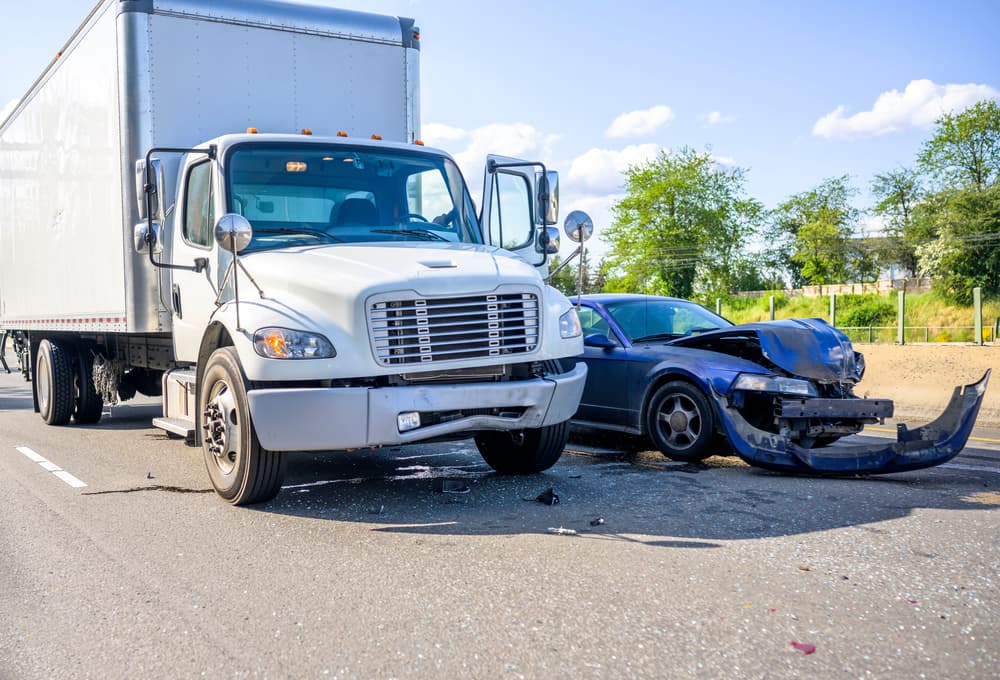
Truck accident claims are significantly more complex than standard car accidents due to:
- Multiple liable parties
- Commercial insurance policies
- Federal safety regulations
- Corporate defense teams
- Extensive evidence sources
Truck accidents also involve higher stakes. Because commercial insurance policies often carry large limits, insurers fight harder to avoid paying full compensation.
Victims may face:
- Aggressive adjusters
- Delayed investigations
- Confusing legal processes
- Pressure to settle quickly
Truck drivers must meet strict federal requirements regarding hours-of-service, training, maintenance, and safety. Violations of these rules can dramatically affect liability, but proving violations requires access to records that companies control.
DFW Injury Lawyers understands the unique challenges involved and works to simplify the process for victims while aggressively pursuing full compensation.
What Victims Should Do After a Truck Accident
The actions victims take after a truck accident can significantly affect their ability to recover compensation.
Important steps include:
- Seeking immediate medical attention
- Following all medical recommendations
- Documenting symptoms and limitations
- Avoiding statements to insurance companies
- Preserving photographs or witness information
Victims should not:
- Accept early settlement offers
- Discuss the accident on social media
- Provide recorded statements without legal guidance
Quick settlements rarely cover long-term medical needs, lost income, or future complications. Trucking companies rely on victims feeling overwhelmed or financially pressured.
DFW Injury Lawyers help victims take control of their situation, gathering evidence and protecting their rights from the start.
Need Help After a Truck Accident?
When a truck driver causes an accident, victims face powerful companies and insurance carriers working to limit responsibility. You deserve a legal team that will fight back.
If you were injured in a truck accident in Texas, call DFW Injury Lawyers today at (972) 440-2320 to learn how our dedicated Texas personal injury attorneys can protect your rights and pursue the compensation you deserve.
Frequently Asked Questions About Truck Driver Accidents in Texas
Who is responsible when a truck driver causes an accident?
Multiple parties may be liable, including the driver, trucking company, cargo loaders, or manufacturers.
Why do trucking companies respond so quickly?
They want to control evidence and limit financial liability.
Do I need a lawyer for a truck accident claim?
Yes. These cases are complex and involve aggressive corporate defense strategies.
Can I sue the trucking company?
Yes, if company negligence contributed to the crash.
What if the insurer offers a settlement right away?
Early offers are usually far below what victims deserve. Always speak with a lawyer first.

Pedro “Peter” de la Cerda
Founder
Attorney Pedro “Peter” de la Cerda is a co-founder of DFW Injury Lawyers. As a young attorney looking for courtroom experience, Mr. de la Cerda began his career defending physicians, nurses, hospitals, trucking, and manufacturing companies in disputes involving personal injury, medical malpractice, products liability, and toxic tort. After seeing many people who were truly injured and deserving of fair compensation, however, Mr. de la Cerda was moved to cross the courtroom aisle and prosecute cases on behalf of plaintiffs in personal injury cases.
Author's Bio