Anyone who drives in the Dallas-Fort Worth Metroplex knows that some stretches of road demand extra caution. Based on traffic data and accident frequency, some of the most dangerous roads in Dallas include Interstate 35E (I-35E), Interstate 635 (the LBJ Freeway), and U.S. Route 75 (Central Expressway). These major arteries, along with several others, see a high volume of crashes due to heavy congestion, complex interchanges, and high speeds.
Reach out to a Dallas personal injury lawyer if you were injured on one of Dallas’s most dangerous roads and want help pursuing the compensation you deserve.
Key Takeaways about the Most Dangerous Roads in Dallas
- Several major highways in Dallas, including I-35E, I-635, and U.S. 75, are identified as having high rates of traffic accidents.
- Factors contributing to dangerous road conditions include heavy traffic volume, ongoing construction projects, high speed limits, and complex interchange designs.
- Common accidents on these roads often involve multi-car pile-ups, truck accidents, and collisions caused by distracted or aggressive driving.
- Knowing the specific risks associated with certain routes can encourage more defensive driving habits among Dallas-area motorists.
- Data from transportation authorities often highlights specific segments of these highways as being particularly prone to incidents.
Why Are Certain Dallas Roads More Dangerous Than Others?
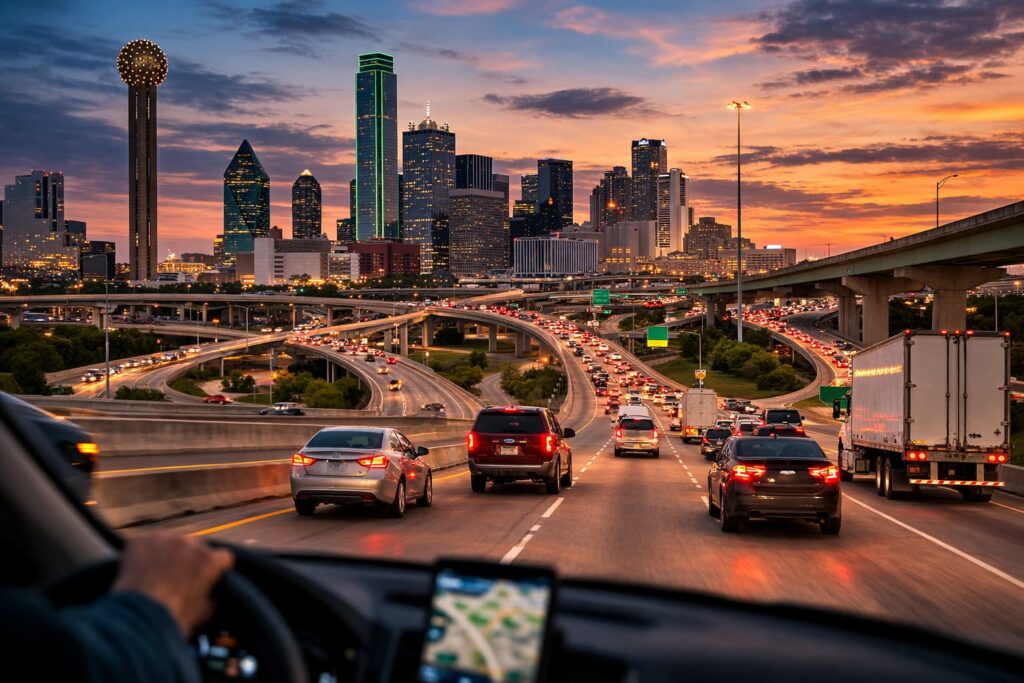
It’s not just your imagination; some roads and intersections are statistically more hazardous. The combination of Dallas’s rapid growth and its role as a major transportation hub creates a perfect storm for traffic incidents. Several key factors contribute to why we see more collisions on the most dangerous roads in Dallas.
First, sheer traffic volume is a massive contributor. Roads like the LBJ Freeway or the Stemmons Freeway carry hundreds of thousands of vehicles every day. When you have that many cars, trucks, and motorcycles packed together, even a small mistake can lead to a chain-reaction collision. The stop-and-go traffic during rush hour near downtown or heading toward Arlington can be particularly risky.
Second, road design and condition play a huge role. The Dallas High-Five Interchange, for example, is an engineering marvel, but its towering flyovers and multiple merging lanes can be confusing for unfamiliar drivers. Other factors include:
- Constant Construction: DFW is always growing, which means our roads are frequently under construction. Lane shifts, concrete barriers, and reduced speed limits create unpredictable conditions that can catch drivers off guard.
- High Speeds: On the open stretches of our interstates, high speeds reduce reaction time. A driver changing lanes without looking or a truck with a tire blowout can cause a serious crash in seconds.
- A Mix of Local and Through Traffic: Major routes like I-35E serve both local commuters from places like Oak Cliff and Lancaster and long-haul truckers passing through Texas. This mix of driving styles and vehicle types increases the potential for conflict.
These elements combine to create environments where the risk of an accident is significantly higher than on a quiet neighborhood street.
A Closer Look at the Most Dangerous Roads in Dallas
While any road can be the site of an accident, certain highways and stretches consistently appear in traffic safety reports. If you live or work in the DFW area, you likely travel on these roads regularly. Awareness is the first step toward protecting yourself.
Interstate 35E (The Stemmons Freeway)
I-35E, particularly the stretch running north from downtown Dallas past the American Airlines Center and Dallas Love Field, is a well-known hotspot for accidents. This corridor is a primary artery connecting Dallas to its northern suburbs. The constant merging of traffic from major cross-streets like Mockingbird Lane and the Woodall Rodgers Freeway creates numerous points of conflict.
According to data from the Texas Department of Transportation (TxDOT), Dallas County consistently ranks high for traffic crashes in the state, and a significant portion of these occur on major interstates like I-35E. The mix of commuter traffic, event-goers heading downtown, and travelers going to and from the airport keeps this road congested at nearly all hours. This congestion often leads to rear-end collisions and sideswipes as drivers jockey for position.
Interstate 635 (Lyndon B. Johnson Freeway)
The LBJ Freeway, or I-635, forms a massive loop around the northern and eastern parts of Dallas, connecting suburbs like Garland and Mesquite. It is infamous for its heavy traffic, especially the segment that intersects with U.S. 75. While the LBJ Express project added managed toll lanes to help with flow, the sheer number of vehicles can be a challenge.
This freeway is a critical route for commercial trucks, which means drivers of smaller passenger vehicles must share the road with 80,000-pound big rigs. Accidents involving commercial trucks can be particularly devastating. Furthermore, the multiple lanes and frequent entrance/exit ramps require drivers to be constantly vigilant, as cars are always merging in and out of traffic.
U.S. Route 75 (Central Expressway)
Cutting straight through the heart of Dallas, U.S. 75 is the primary north-south route for a huge number of commuters. It connects downtown with neighborhoods and cities to the north. The "canyon" section just north of downtown, where the highway is below grade level, is notorious for backups and sudden slowdowns.
Drivers on Central Expressway often face:
- Sudden stops due to congestion.
- Aggressive lane changes from other drivers trying to make an exit.
- Limited shoulder space in older sections, leaving disabled vehicles with nowhere safe to go.
These conditions make U.S. 75 one of the most demanding and dangerous roads in Dallas for daily driving, with accidents being a frequent cause of major delays.
Loop 12 (Northwest Highway)
Not all dangerous roads are massive interstates. Loop 12, especially the section known as Northwest Highway, is a major surface thoroughfare with dozens of traffic lights, business entrances, and cross-streets. This road carries a huge amount of traffic through both commercial and residential areas.
The combination of high traffic volume and frequent stops and starts leads to a high number of intersection-related accidents. Drivers turning left, running red lights, or pulling out of shopping centers without a clear view are common causes of collisions along this route. Its proximity to Dallas Love Field also adds to the congestion, making it a challenging drive.
The Dallas High-Five Interchange
This five-level stack interchange connecting I-635 and U.S. 75 is one of the busiest in Texas. While it was designed to move traffic efficiently, its complexity can be a lot for some drivers to process. With ramps soaring up to 12 stories high and lanes splitting off in multiple directions, a moment of indecision or a last-second lane change can have serious consequences.
Navigating this interchange, especially during peak hours, requires a driver’s full attention and a clear understanding of their route beforehand.
Common Types of Accidents on Dallas's Most Dangerous Roads
The unique conditions on these high-risk roads lead to several common types of collisions. When negligence is a factor, the responsible party may be held accountable for the harm they cause.
- Rear-End Collisions: These are extremely common in the stop-and-go traffic found on I-35E and U.S. 75. They are often caused by distracted driving or following too closely.
- Truck Accidents: On highways like I-635 and I-30 heading toward Fort Worth, the high volume of commercial traffic increases the risk of serious accidents involving semi-trucks.
- Multi-Vehicle Pile-ups: High speeds and sudden stops can cause a chain reaction, involving many cars and resulting in complex injury claims.
- Sideswipe and Lane-Change Accidents: With multiple lanes of traffic moving in the same direction, drivers who fail to check their blind spots before merging or changing lanes cause countless crashes.
These accidents can lead to a wide range of injuries, from minor whiplash to life-altering brain and spinal cord damage.
What Makes Driving in the DFW Metroplex Challenging?
Beyond specific roads, the overall driving environment in Dallas-Fort Worth presents unique challenges. The region's population has exploded, but infrastructure development sometimes struggles to keep pace. This means more cars are trying to use the same roads, leading to daily gridlock.
Aggressive driving is another major concern. Frustration from traffic jams can lead to behaviors like speeding, tailgating, and unsafe lane weaving. According to the National Highway Traffic Safety Administration (NHTSA), speeding is a contributing factor in 29% of all fatal traffic accidents nationwide, and Dallas is no exception.
Finally, distracted driving remains a persistent and dangerous problem. Whether it’s texting, talking on the phone, or adjusting a GPS, taking your focus off the road for even a few seconds on a busy Dallas highway can be enough to cause a serious crash. Texas law, under Transportation Code § 545.4251, prohibits reading, writing, or sending electronic messages while driving.
Staying aware of these regional challenges can help you adopt a more defensive mindset every time you get behind the wheel.
What to Do After an Accident on a Dangerous Dallas Road
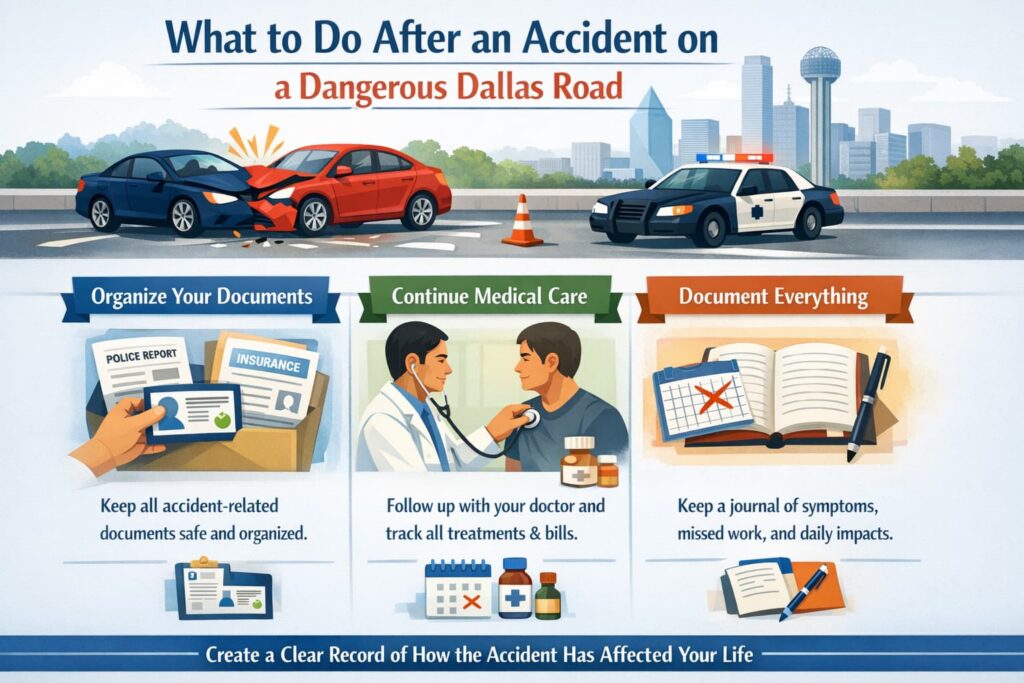
If you are involved in a collision, the moments and days that follow can feel chaotic. Once you have received any necessary immediate medical attention and are safely back home, taking a few organized steps can help protect your rights and prepare you for what comes next.
- Organize Your Documents: Find a safe place to keep everything related to the accident. This includes the police report number, the other driver's information, photos you took at the scene, and any correspondence from insurance companies.
- Continue Medical Care: Some injuries, like whiplash or even a traumatic brain injury (TBI), may not show symptoms immediately. It's important to follow up with a doctor, even if you felt fine at the scene. Keep detailed records of all your appointments, treatments, and medical bills.
- Document Everything: Start a journal to track your physical symptoms, pain levels, and how the injuries are affecting your daily life. Note any days you missed from work or school and any activities you can no longer do.
This documentation creates a clear record of how the accident has impacted your life, which is very important when seeking compensation for your losses.
Holding Negligent Parties Accountable
When an accident is caused by another driver's carelessness—whether through speeding, distraction, or intoxication—you have the right to seek compensation. This process involves holding the at-fault party accountable for their actions. A personal injury claim aims to recover financial compensation for various losses, which are often referred to as damages.
This can include:
- Medical expenses, both current and future.
- Lost wages from time away from work.
- Pain and suffering.
- Damage to your vehicle.
Pursuing a claim requires a thorough investigation to establish who was at fault and to demonstrate the full extent of your losses. It is about seeking justice and securing the resources you need to recover and move forward.
FAQs about the Most Dangerous Roads in Dallas
We’ve gathered some common questions people have about traffic and accidents on the most dangerous roads in Dallas.
What is the most dangerous intersection in Dallas?
While it can change from year to year, the intersection of Loop 12 (Northwest Highway) and I-35E is frequently cited as one of the most dangerous due to high traffic volume and a large number of turning and merging movements that lead to collisions. Other intersections along major thoroughfares like Preston Road and Belt Line Road also see high accident rates.
Are surface streets safer than highways in Dallas?
Not necessarily. While highways have higher speeds, which can lead to more severe accidents, surface streets like Northwest Highway or Military Parkway have more variables like intersections, pedestrians, and cars entering from driveways. These factors contribute to a high frequency of accidents, even if they occur at lower speeds.
How does construction impact road safety in Dallas?
Construction zones significantly increase the risk of accidents. They often involve sudden lane shifts, narrowed lanes, uneven pavement, and the presence of heavy machinery. Confused or impatient drivers navigating these complex zones can easily cause a crash. It's critical to slow down and pay extra attention in work zones.
Does the weather make these dangerous roads even worse?
Absolutely. Dallas is known for sudden, intense thunderstorms. Heavy rain can reduce visibility and make roads slick, increasing stopping distances. When these conditions occur on already congested and dangerous roads like I-635 or the High-Five Interchange, the risk of multi-car pile-ups rises dramatically.
What can I do to be a safer driver on Dallas roads?
The best practices for safe driving are universal but especially important here. Maintain a safe following distance, always use your turn signals, avoid distractions like your phone, check your blind spots thoroughly before changing lanes, and adjust your speed for traffic and weather conditions. Staying alert and predictable is your best defense.
The Muscle You Need to Win the Fight
If you or a loved one has been injured in a crash on one of the most dangerous roads in Dallas, you don’t have to face the recovery process by yourself. Dealing with insurance companies and legal complexities can be a heavy burden when you should be focused on healing. At DFW Injury Lawyers, we are ready to be your trusted advisors and advocates. Our team is committed to fighting for the justice and compensation you deserve.
We prepare every case with the dedication it needs, standing up to insurance companies and fighting tirelessly for our clients. Contact us today for a free, no-obligation legal consultation. Let us put our strength to work for you.

Kevin L. Edwards
Founder
Attorney Kevin Edwards is a co-founder of DFW Injury lawyers. Over the last 15 years, Mr. Edwards has dedicated his practice to helping those who have been injured or harmed by the negligence, malfeasance, and/or recklessness of others.
Author's Bio